


Ortho-K Lenses: How Overnight Contacts Reshape Vision

Most contact lenses correct vision only when worn. Ortho-k lenses work the opposite way. Orthokeratology, commonly called ortho k, uses rigid, gas-permeable lenses worn overnight to gently reshape the cornea so that wearers can see clearly during the day without glasses or standard daytime contacts.
The correction is temporary and reversible, which is precisely what makes it appealing to certain wearers and unsuitable for others. Understanding how ortho-k lenses work, who they are designed for, and where their limitations lie helps anyone researching this option make a more informed decision.
What Orthokeratology Is and How Ortho-K Lenses Work
Orthokeratology is a non-surgical method of vision correction that uses specially fitted rigid gas-permeable contact lenses to temporarily flatten the cornea. The cornea, the clear dome at the front of the eye, provides approximately 75% of the eye's focusing power. In myopia (nearsightedness), the cornea is too curved, causing light to focus in front of the retina rather than on it.
Ortho-k lenses apply gentle, calibrated pressure to the corneal surface overnight, flattening it just enough to bring light back into correct focus on the retina.
An eye doctor begins the process by mapping the cornea using a corneal topographer, a device that reflects light off the eye's surface to create a precise three-dimensional map of its shape. No contact is made with the eye during this measurement. The resulting map is used to design a custom lens that matches the specific curvature correction the wearer needs.
What Happens When Ortho-K Contacts Are Worn Overnight
Ortho-k contacts are inserted before sleep and worn for six to eight hours. The gentle pressure of the closed eyelids keeps the lenses in place and helps maintain consistent contact between the lens and the corneal surface. Upon waking, the lenses are removed. The cornea retains its flattened shape for a period of time, typically one to two days for most wearers, providing clear unaided vision throughout the day.
The effect is cumulative at first. Most wearers notice gradual improvement over the first one to two weeks of nightly wear, with full correction taking up to a few weeks or longer, depending on the degree of myopia being corrected. Up to three sequential pairs of ortho-k lenses may be used during the fitting process, each one bringing the cornea progressively closer to the target shape. Once the optimal correction is reached, the same lens design is worn each night to maintain it.
The analogy most often used is dental orthodontics: braces apply continuous pressure to move teeth into alignment, and retainers maintain that alignment afterward. Ortho-k lenses function as both the corrective force and the retainer simultaneously.
Who Ortho-K Lenses Are Designed For

Ortho k lenses primarily correct myopia. They are FDA-approved for myopia correction and can also address mild astigmatism in some cases. They are not a universal solution; prescription range, lifestyle, and commitment to nightly wear all factor into whether ortho-k contacts are appropriate for a given wearer.
The lenses suit wearers who want clear daytime vision without glasses or standard contact lenses and who either are not candidates for refractive surgery or prefer a reversible option. Swimmers, contact sport athletes, and people who work in dusty or dry environments often find ortho-k contacts particularly practical, as the absence of daytime lens wear eliminates the friction points those environments create.
Ortho-K for Children and Myopia Management
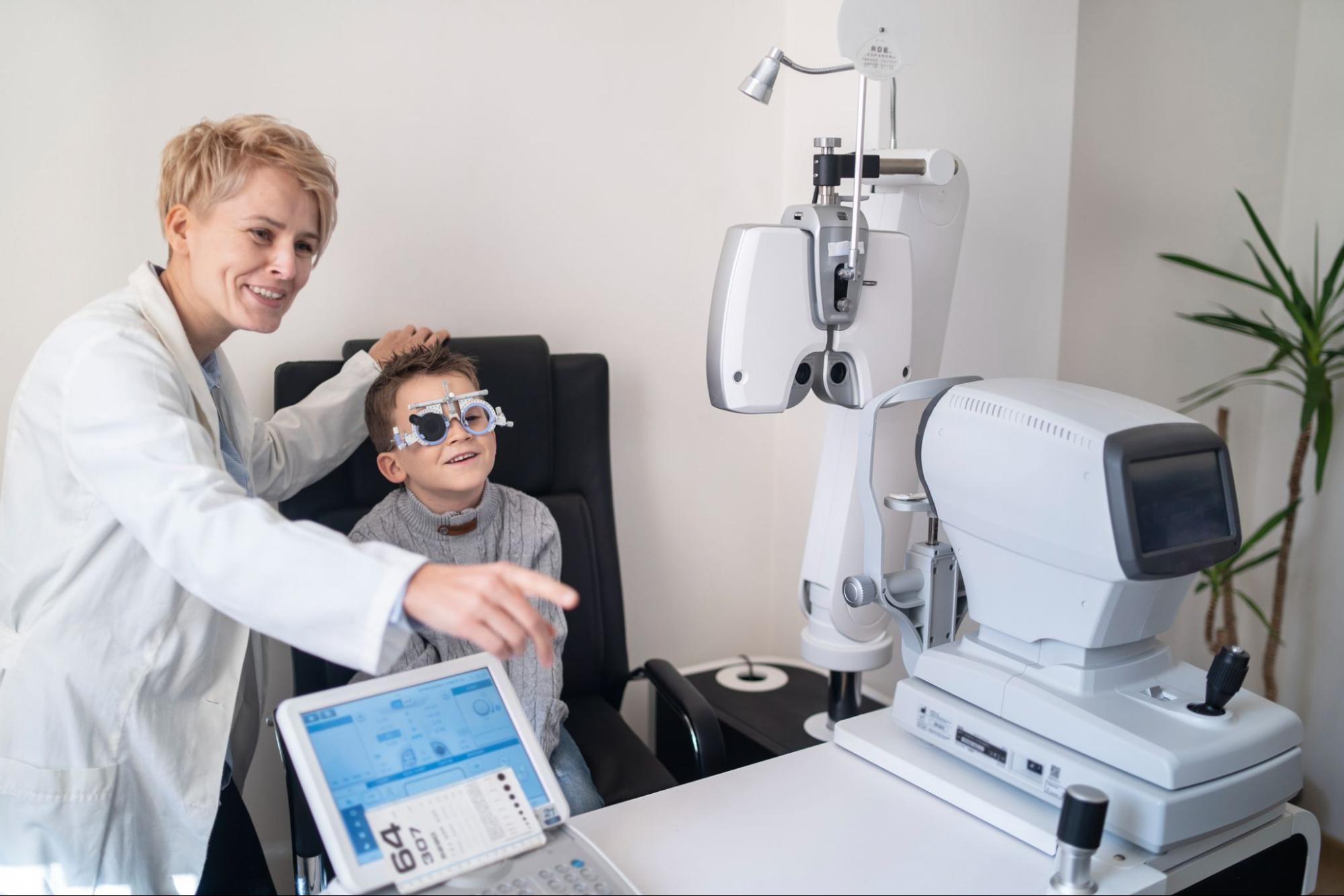
A significant portion of ortho-k interest comes from parents researching options for children with progressing myopia. Vision correction surgeries such as LASIK are not recommended until vision stabilizes, typically in the early to mid-20s, which leaves a long window during which a child's myopia may worsen each year without intervention. Ortho-k lenses have shown promise in slowing the progression of childhood myopia, making them one of the more actively studied tools in the myopia management conversation.
Children as young as eight can be fitted for ortho-k lenses, provided they have the maturity to follow the care routine. Because the lenses are worn during sleep rather than inserted and removed throughout the day, many parents find the routine simpler to manage than daytime contact lenses. The common vision problems that follow uncorrected or undercorrected myopia into adulthood make early management worth considering carefully.
The Real Limitations of Ortho-K Lenses
Ortho-k lenses have a clearly defined scope, and the limitations are worth understanding before pursuing a fitting.
Prescription Range: Ortho-k lenses work best for mild to moderate myopia, typically up to -6.00 diopters. Higher prescriptions may not achieve full correction, and the residual error may require supplemental daytime correction. Wearers with significant astigmatism beyond what ortho-k can address will need a different approach, such as toric contact lenses or glasses.
Cost and Access: Ortho-k fitting involves multiple appointments, custom lens fabrication, and ongoing follow-up visits. The upfront cost is higher than standard contact lens fitting. Most vision insurance plans do not cover orthokeratology, though some flexible spending account (FSA) and health savings account (HSA) funds may be applicable.
Commitment Required: Missing nights of wear causes the corneal reshaping to partially reverse. Wearers who travel frequently, have irregular sleep schedules, or struggle with consistent routines may find the correction less reliable than standard lens wear.
Infection Risk: Any overnight contact lens wear carries a higher infection risk than daytime wear. Ortho-k contacts require strict lens hygiene and regular follow-up care to keep that risk low. The American Academy of Ophthalmology notes that ortho-k is safe when lens care guidelines are followed and routine check-ups are maintained.
For wearers whose prescription, lifestyle, or comfort tolerance falls outside what ortho-k suits, standard daily or monthly contact lenses remain the most practical path to clear, consistent daytime vision.
Ortho-K vs. Standard Contact Lenses: What Sets Them Apart

Standard contact lenses sit on the cornea and correct vision only when worn. Remove them, and the correction stops immediately. Ortho k contacts reshape the cornea itself, so the correction persists after the lenses come out. That distinction creates a fundamentally different wearing experience: clear unaided vision during the day, with correction happening overnight rather than during waking hours.
Standard soft lenses are available across a much wider prescription range, including options for astigmatism, presbyopia, and high myopia. They require no custom fitting beyond a standard contact lens exam and are available as daily, weekly, or monthly replacements. For most wearers, they represent the simpler and more accessible path to vision correction.
Ortho-k contacts occupy a narrower lane. They serve wearers with mild to moderate myopia who specifically want daytime freedom from lenses, have the discipline for consistent nightly wear, and can commit to the fitting process and ongoing care. For wearers who don't meet those criteria, the benefits of ortho-k don't outweigh the added complexity.
Both approaches are supported by specialty contact lens options for specific prescriptions and conditions. The right choice depends on the wearer's prescription, lifestyle, and vision goals, as discussed with an eye doctor or vision specialist.
PerfectLensWorld carries a wide range of contact lenses in daily, weekly, and monthly options across all major brands. For wearers exploring vision correction options beyond ortho-k, the full catalog includes soft lenses for myopia, astigmatism, and presbyopia across every major wearing schedule.
Frequently Asked Questions About Ortho-K Lenses
Do Ortho-K Lenses Really Work?
For wearers within the appropriate prescription range, ortho-k contacts deliver measurable, clinically supported correction. The American Academy of Ophthalmology reports that most patients in FDA-approved ortho k lenses clinical studies achieved 20/40 vision or better.
Results vary by the degree of myopia being corrected: mild prescriptions tend to reach full correction more quickly and reliably than moderate ones. The correction is not permanent; it requires consistent nightly wear to maintain. When that commitment is met, ortho-k lenses work as described.
What Are the Downsides of Ortho-K?
The main downsides are cost, prescription limits, and the discipline the treatment demands. Ortho-k fitting costs more than standard contact lens fitting and is rarely covered by vision insurance. The lenses work best within a defined myopia range and offer limited benefit for high prescriptions or significant astigmatism. Overnight lens wear carries a higher infection risk than daytime wear, which requires strict hygiene and regular follow-up appointments. Wearers who miss nights of wear will notice the correction fading, which makes consistency non-negotiable for reliable results.
Who Is Not a Good Candidate for Ortho-K?
Wearers with high myopia above -6.00 diopters, significant astigmatism, or presbyopia are generally not strong candidates. People with dry eye conditions may find overnight rigid lens wear uncomfortable, as rigid lenses tolerate dry eye less forgivingly than soft lenses.
Anyone with an active corneal condition, irregular corneal shape from prior surgery, or a history of corneal infection needs to discuss those factors with an eye care provider before pursuing ortho-k. Children younger than eight are typically not fitted due to compliance requirements. Adults who cannot commit to consistent nightly wear are unlikely to maintain stable correction.

