


The Most Common Vision Problems in Adults and How to Spot Them Early

Let’s be honest: most of us take our eyesight for granted until something feels "off." Maybe you’re squinting a little harder at road signs, or perhaps your phone screen needs to be held just a little bit further away than it used to.
As adults, our eyes go through natural changes. Some are due to aging, while others are a side effect of our modern, screen-heavy lifestyles. The good news is that most of these issues are easily correctable if you catch them early.
What Are "Vision Problems"?
In the world of eye care, "vision problems" is a broad term that usually falls into one of two categories.
First, you have refractive errors. This is the most common category. It simply means the shape of your eye does not bend light correctly, resulting in a blurred image. These are not usually diseases. They are structural issues that can be fixed with glasses or contact lenses.
Second, you have eye diseases. These are biological conditions that affect the health of the eye tissue itself, such as the retina, the optic nerve, or the lens. Unlike refractive errors, these often require medical treatment beyond just a new prescription.
Why Does Vision Change as We Age?
Many adults are surprised when their vision shifts, especially if they had "perfect" 20/20 vision in their youth. There are three main factors at play here.
- Physical aging: Just like our joints get stiffer, the lens inside our eye loses flexibility over time.
- Environmental stress: Our eyes were not evolved to stare at backlit screens for 10 hours a day.
- Systemic health: Your eyes often show early signs of systemic conditions such as diabetes or high blood pressure.
General Warning Signs You Should Never Ignore
Before we look at specific conditions, it is important to know the general "red flags." If you experience any of the following, you should schedule an appointment immediately rather than waiting for your annual exam.
- Sudden blurry vision
- Flashes of light
- Eye pain
- Rainbow halos
- Loss of peripheral vision
The Most Common Refractive Errors (The "Fixable" Stuff)

These are the most common reasons your vision might feel blurry. Fortunately, they are usually easy to fix with the right lenses.
1. Computer Vision Syndrome (Digital Eye Strain)
If you spend your day staring at a laptop and your evening scrolling through TikTok, you are likely familiar with this one.
The Symptoms: Dry, gritty eyes, headaches, blurred vision at the end of the day, and neck or shoulder pain.
The Fix: Follow the 20-20-20 Rule: Every 20 minutes, look at something 20 feet away for 20 seconds.
Lens Recommendation:High-moisture daily lenses like
2. Presbyopia (The “Short Arm” Syndrome)
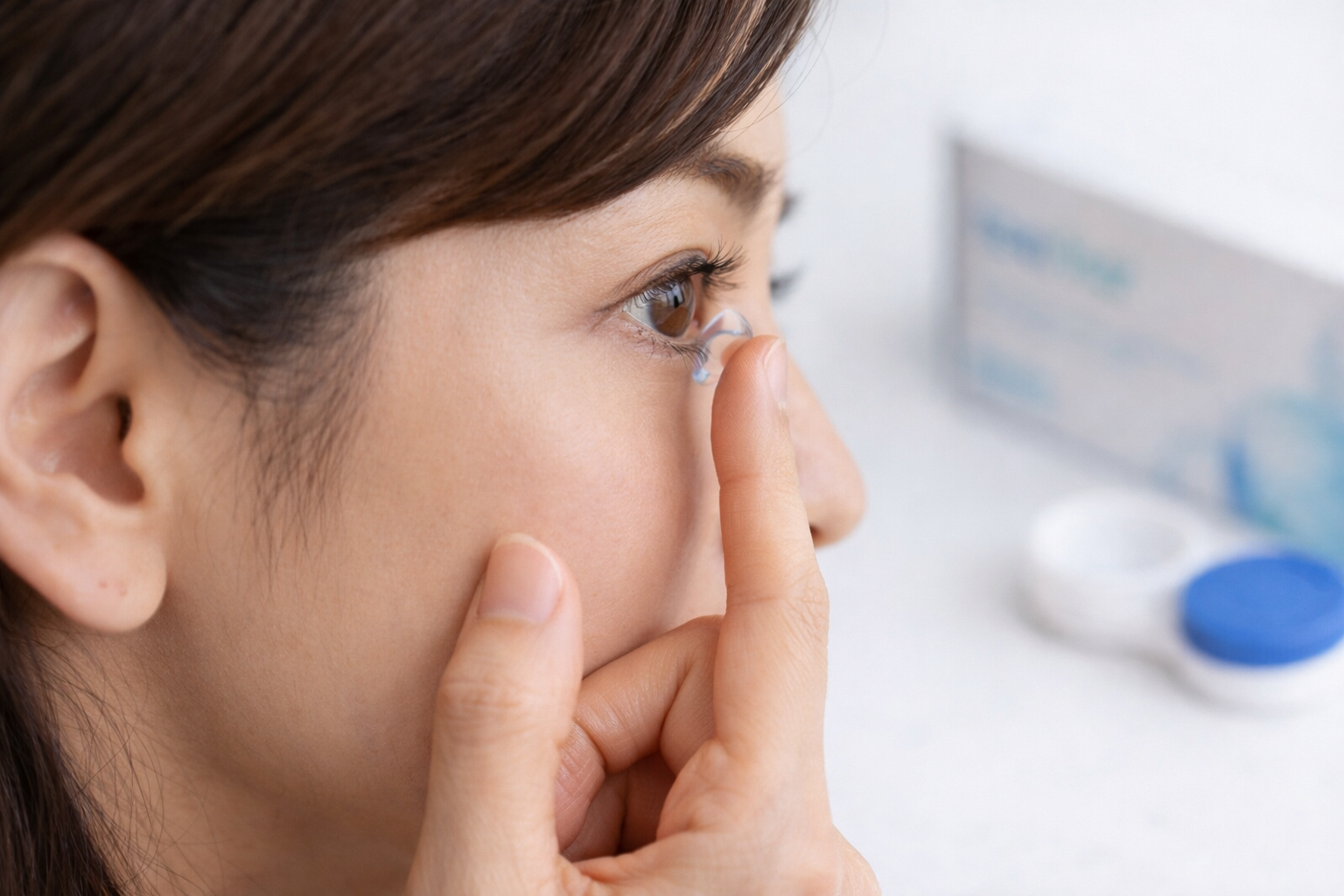
This sneaks up on almost everyone after age 40.
The Symptoms: Holding menus or your phone farther away to read text.The Fix: You don’t have to wear reading glasses over your contacts.
Lens Recommendation:Switch to multifocal contact lenses such as:
3. Astigmatism
Astigmatism simply means your cornea is shaped more like a football than a sphere.
The Symptoms: Blurred or distorted vision at any distance, especially noticeable as streaks or halos around headlights at night.
The Fix: You need toric contact lenses, which stay stable on your eye.
Popular option:
4. Dry Eye Syndrome
This occurs when your eyes don’t produce enough quality tears.
The Symptoms: Burning, stinging, and a sandy sensation. The Fix: Switching to daily disposable lenses can help because you start with a fresh lens every day.
Serious Eye Health Conditions to Watch For
These conditions affect the health of the eye and often progress silently.
1. Glaucoma (The “Silent Thief”)
Glaucoma damages the optic nerve, often due to elevated pressure in the eye.
The Danger: It develops without symptoms in early stages; later, it causes permanent loss of peripheral vision.
2. Cataracts
A cataract is the clouding of the eye’s natural lens.
The Symptoms:Faded or yellowed colors, glare sensitivity, and halos around lights.
3. Age-Related Macular Degeneration (AMD)
AMD affects the macula, which is responsible for sharp central vision.
The Symptoms:A dark spot in central vision, wavy or distorted lines.
The Verdict: Don’t Skip the Exam!
Even if you buy your contacts online for convenience or savings, you still need regular eye exams. A prescription check only tells you how to correct your vision — a full exam screens for the “silent” issues listed above.
Disclaimer: This blog is for informational purposes only. Always consult with your eye care professional for medical advice and prescriptions.

