


Kids' Prescription Sunglasses: How to Find the Right Pair for Your Child

A child who needs glasses doesn’t stop needing vision correction when they step outside. Squinting in bright sunlight, struggling with glare on the soccer field, or flinching on a sunny beach are all signs that regular sunglasses are not enough. Kids' prescription sunglasses solve both problems at once: they correct the child’s vision and shield their eyes from ultraviolet (UV) light.
This matters more for children than it does for adults. A child’s crystalline lens is clearer than an adult’s, which means it filters less UV radiation. More UV light reaches the retina, and the cumulative damage from years of childhood sun exposure contributes to long-term conditions, including cataracts and macular degeneration later in life. Children who wear glasses and spend meaningful time outdoors benefit significantly from prescription sunglasses.
Do They Make Prescription Sunglasses for Kids?
Prescription sunglasses for kids are more accessible than most parents expect. They are available for most childhood prescriptions, including single-vision, bifocal, and in some cases progressive lenses.
The main format options include:
- Prescription-tinted lenses fitted into dedicated sunglass frames
- Photochromic lenses (often called transition lenses) that darken automatically outdoors and clear up indoors
- Clip-on prescription sunglasses that attach directly to a child’s existing frames
- Prescription wrap-around sunglasses designed for sports and extended outdoor activity
Each option suits a different lifestyle. Photochromic lenses are popular for school-age children who move frequently between indoor and outdoor settings, since they remove the need to manage two separate pairs.
However, they darken more slowly in cold temperatures and will not darken inside a car, because windshields block the UV light that triggers the transition. For children who spend sustained time outdoors in warm weather, a dedicated pair of kids' prescription sunglasses tends to offer more consistent protection.
Once parents understand the options available, the next question is usually what to look for in the lenses themselves, and that starts with UV protection.
Why UV Protection Matters More for Young Eyes

UV protection for children’s eyes gets far less attention than sunscreen, yet the risk is just as real. The World Health Organization (WHO) reports that children and adolescents are particularly vulnerable, which can result in harmful UV exposure and potential for developing skin cancer later in life.
Children’s eyes admit significantly more UV radiation than adult eyes. The lens inside a child’s eye is more transparent, so less UV is absorbed before it reaches the retina. This is why UV protection sunglasses for kids are not simply a scaled-down version of adult eyewear. They address a genuine physiological vulnerability that adults have already outgrown.
What UV400 Actually Means
Not all sunglasses labeled “UV protection” offer the same level of defense. UV400 is the designation recommended by the American Academy of Ophthalmology (AAO) and is equivalent to 100% UVA and UVB protection up to 400 nanometers. When shopping, look specifically for the UV400 label or the phrase “100% UV protection.” Avoid lenses that state a partial percentage or carry no UV rating at all.
One important misconception worth correcting: a dark lens tint is not the same as UV protection. A deeply tinted lens without UV coating is more harmful than no tint at all, because the pupil dilates in response to the darker perceived light and admits more unfiltered UV radiation to the retina. Tint is for comfort; UV400 coating is for protection.
Polarization is a separate feature again. A polarized lens cuts horizontal glare from reflective surfaces such as water, wet pavement, and snow. A UV-rated lens blocks radiation. High-quality prescription sunglasses for kids typically offer both, and understanding the distinction helps parents compare products with confidence.
With a clear picture of what the lenses should do, the next step is choosing frames that fit, last, and hold up to the way children actually treat their glasses.
How to Choose Prescription Sunglasses for Kids
Choosing the right pair of shades for kids involves more than picking a color the child likes. Fit, durability, and lens specification all affect how well the sunglasses perform and how likely a child is to wear them.
Frame Fit and Durability
Children’s frames face considerably more punishment than adult frames. Dropped on hard floors, sat on, stuffed into backpacks, and occasionally used as a prop in playground games. Kids’ eyewear takes a beating. When evaluating frames, look for:
- Flexible hinges that spring back rather than snap under pressure.
- Rubber or silicone nose pads that grip the face and resist slipping during activity.
- Lightweight materials such as TR-90 nylon or titanium, which reduce fatigue during extended wear.
- Polycarbonate lenses, which are more impact-resistant than standard plastic lenses and the standard recommendation for children’s eyewear.
Frame width matters too. Frames should sit flush on the nose without sliding and should not extend beyond the temple. For younger children, especially, frames that are even slightly too wide will shift constantly, which undermines both the vision correction and the UV coverage the lenses are supposed to provide.
Should Kids’ Sunglasses Be Polarized?
For most outdoor situations, polarized lenses are a worthwhile upgrade. They cut horizontal glare from reflective surfaces, which reduces eye strain during long stretches of time near water, on sports fields, or in snowy conditions. For a child spending a full day at the beach, on the baseball diamond, or riding bikes after school, the difference is noticeable.
The main limitation worth knowing: polarized lenses can interfere with the readability of some LCD screens, including GPS devices, certain car dashboard displays, and some smartphones. For everyday outdoor wear and sports, this is rarely a problem. For polarized UV protection sunglasses for kids who are old enough to be around moving vehicles, a conversation with an optician about the right lens specification is worthwhile.
Once families have settled on a frame style and lens type, the next consideration is whether those lenses also need to handle the demands of sport.
Kids' Prescription Sports Sunglasses: What Active Kids Need
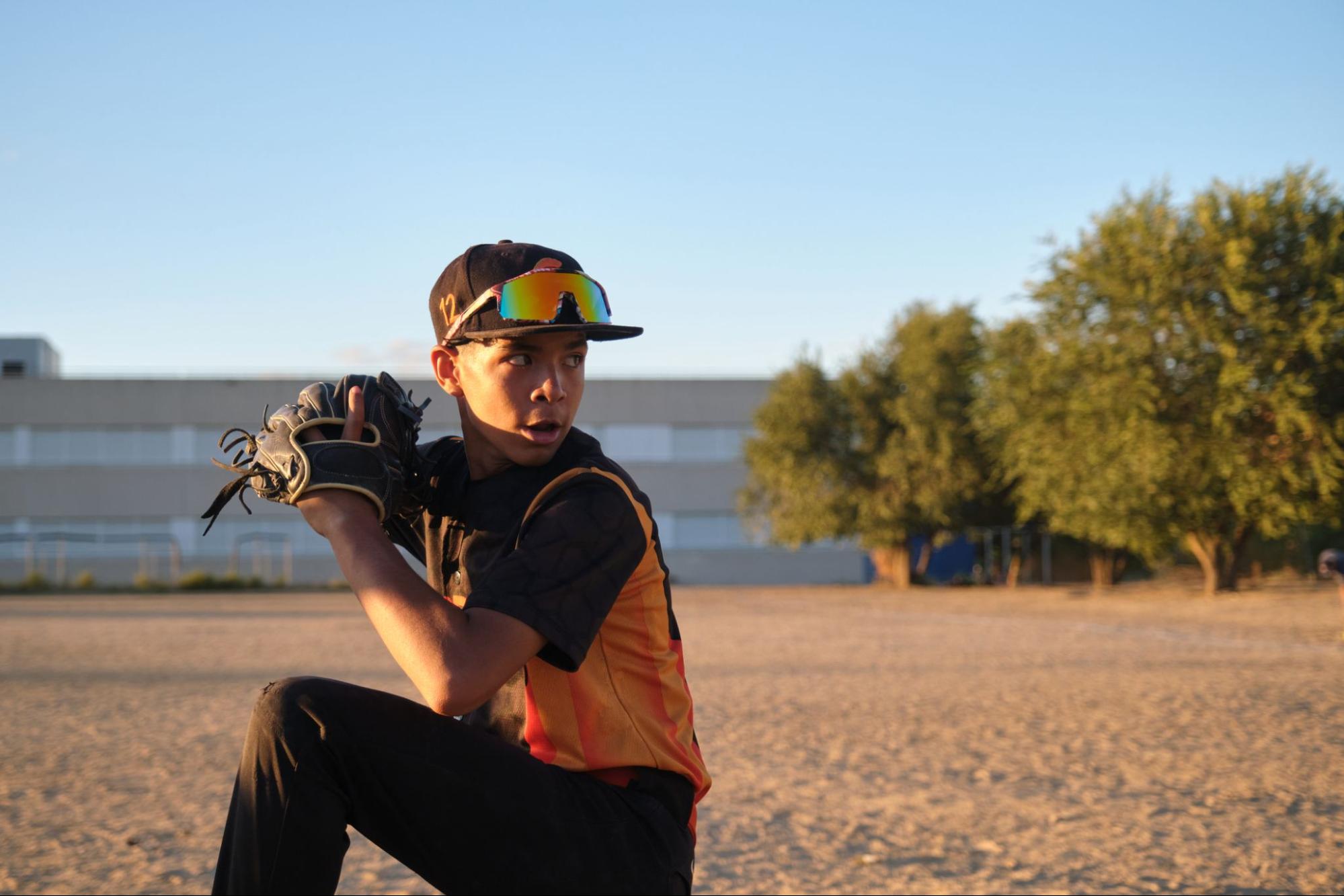
For children involved in sport, outdoor recreation, or any physical activity where impact is a realistic possibility, standard eyeglass frames are not built to protect adequately. A regular frame can shatter on contact and pose a direct risk to the eye. Kids' prescription sports sunglasses are engineered to a different standard.
Look for frames and lenses rated to ASTM F803 or ANSI Z87.1 standards, which indicate the eyewear has passed drop-ball and high-mass impact testing for protective eyewear. These certifications are printed on the frame or included in the product documentation.
Beyond impact resistance, the features that matter most for active children include:
- Wrap-around frames to block peripheral light, wind, and debris.
- Adjustable strap/retention cord to keep the frames in place during activity.
- Rubberized grip surfaces on the nose bridge and temple tips.
- Polycarbonate lenses rather than glass or standard CR-39 plastic.
- Anti-fog coating for high-exertion activities where heat and moisture build up quickly.
Many opticians and online retailers now carry dedicated kids' prescription sports sunglasses in sizes appropriate for children as young as four or five. Sport-specific options exist for cycling, baseball, skiing, and water sports, though most quality wrap-around styles perform well across multiple activities.
As children grow into adolescence, their needs shift again, and the world of sunglasses for teenagers introduces a different set of considerations.
Sunglasses for Teenagers: What Changes
By the time a child reaches their early teenage years, prescription needs are often stronger and more stable than they were in primary school, and their daily life involves more varied UV exposure: driving lessons, competitive sport, longer commutes, and let’s be honest, for teens functionality takes a backseat to style.
Sunglasses for teenagers also need to account for fit. Most teens have outgrown dedicated children’s frame sizes and benefit from adult-width frames, which open up a much wider range of styles. Teenagers are also more likely to take care of a pair of sunglasses they actually like the look of, so involving them in the selection process tends to improve how consistently they wear them.
From a lens specification standpoint, polarized UV400 lenses in semi-rimless or full wrap-around frame styles offer the best combination of performance and visual appeal for this age group. One practical note for older teens who drive or are learning to drive: polarized lenses, while excellent in bright conditions, can reduce visibility of some LCD dashboard displays and alter the appearance of wet road surfaces. For learner drivers, this is worth discussing with an optician when choosing a polarized pair.
Understanding what teenagers need from their sunglasses is closely connected to understanding when vision problems typically begin, and when prescription sunglasses first become relevant.
At What Age Do Most Kids Get Glasses?

Parents sometimes assume vision problems only become apparent once a child starts school, but issues can surface much earlier. The American Optometric Association recommends a child’s first comprehensive eye exam at six months, again at age three, and then annually from the first year of school onward. An estimated one in four children in the United States has a vision condition that affects their ability to learn.
Most children who need corrective lenses receive their first pair between ages five and nine, when reading demands and classroom distance tasks make uncorrected vision harder to hide. However, myopia (nearsightedness) is appearing earlier than it once did. Research published in Ophthalmology found that myopia onset before age seven is becoming more common globally, linked in part to more time spent on near-work tasks and less time spent outdoors.
Children who already wear glasses are candidates for prescription sunglasses regardless of age. Prescription options exist for children as young as two or three, and most pediatric opticians have experience fitting young children with frames that stay in place. The earlier a child begins wearing UV protection outdoors, the greater the long-term benefit to their eye health.
One concern that often follows the question of age is the question of cost, and specifically, whether insurance will help.
Will Insurance Pay for Prescription Sunglasses?
The cost of prescription sunglasses for kids can be a barrier, but coverage is more widely available than many parents realize. Most major vision insurance plans treat prescription sunglasses as corrective eyewear, which means they fall within the same annual benefits as everyday glasses.
Common coverage scenarios include:
- VSP and EyeMed plans typically offer an annual frame and lens allowance that applies to prescription sunglasses as well as regular glasses
- Medicaid covers corrective eyewear for children under 21 in most U.S. states
- Flexible Spending Accounts (FSA) and Health Savings Accounts (HSA) can be used for prescription sunglasses, since they qualify as a prescribed medical device
When contacting the insurer, ask specifically whether prescription tinted lenses are covered under the plan. Some plans distinguish between standard corrective lenses and tinted or coated lenses and apply a separate copay for UV coating or polarization, even when the base lens is fully covered. Getting that detail in writing before ordering prevents unwanted surprises. Parents can also learn more about using FSA and HSA funds for eyewear to get the most from available benefits.
With a clearer picture of options, UV standards, frame selection, and cost, a few specific questions tend to linger for parents before they feel ready to buy.
Finding the Right Pair of Shades

Every year a child spends outdoors without proper UV protection adds to a cumulative total that their eyes cannot reverse. Kids' prescription sunglasses address that risk while keeping vision sharp, and they are available through opticians and online retailers at prices that suit most budgets.
Children who already wear glasses should have prescription sunglasses on the agenda at the next eye appointment. Children who wear contact lenses can pair them with non-prescription sunglasses carrying a full UV400 rating for solid outdoor protection. Parents can also explore UV protection contact lenses as a supplemental measure, though the AAO is clear that contacts do not replace sunglasses, since lenses cover only part of the eye’s surface area.
The best pair of prescription sunglasses for a child is the one that fits well, holds up to daily life, and that children will actually want to wear. An unused pair in a drawer offers no protection at all.
Kids' Prescription Sunglasses: Questions Answered
Do They Make Prescription Sunglasses for Kids?
Yes. Prescription sunglasses are available for children across a wide range of frame styles and sizes, including sports-specific designs built for impact resistance. Most prescriptions can be filled in tinted lenses, and photochromic options are available for children who prefer a single pair that adjusts automatically between indoor and outdoor light.
Will My Insurance Pay for Prescription Sunglasses?
Many vision plans, including VSP and EyeMed, apply their annual eyewear allowance to prescription sunglasses. Medicaid covers corrective eyewear for children under 21 in most U.S. states. FSA and HSA funds can also be applied to prescription sunglasses since they qualify as a prescribed medical device. Contact the plan provider directly to confirm what is covered and whether tinted lenses or polarization carry a separate copay.
At What Age Do Most Kids Get Glasses?
Most children who need corrective lenses receive their first pair between ages five and nine, though vision problems can appear much earlier. The AAO recommends a comprehensive eye exam at six months, age three, and then annually once a child begins school. Any child already wearing glasses is a candidate for prescription sunglasses, regardless of age.
How to Choose Sunglasses for Kids?
Start with fit: frames should sit flush on the nose without sliding and not extend beyond the temple. Choose polycarbonate lenses for the best impact resistance. Confirm the lenses carry a UV400 rating, which means 100% protection against UVA and UVB rays. For active children, wrap-around frames with flexible hinges provide better coverage and durability. Polarized lenses reduce glare and are worth the upgrade for children who spend significant time outdoors near water or on sports fields.
Should Kids’ Sunglasses Be Polarized?
Polarized lenses reduce glare from reflective surfaces, including water, pavement, and snow, and they cut eye strain during extended outdoor activity. For most children wearing UV protection sunglasses for kids outdoors, polarization is a worthwhile feature. The one practical limitation is the reduced readability of some LCD screens. For school-age children involved in outdoor sports or beach and water activities, polarized lenses are a smart choice.

