


Adult vs Kids Sunglasses Explained
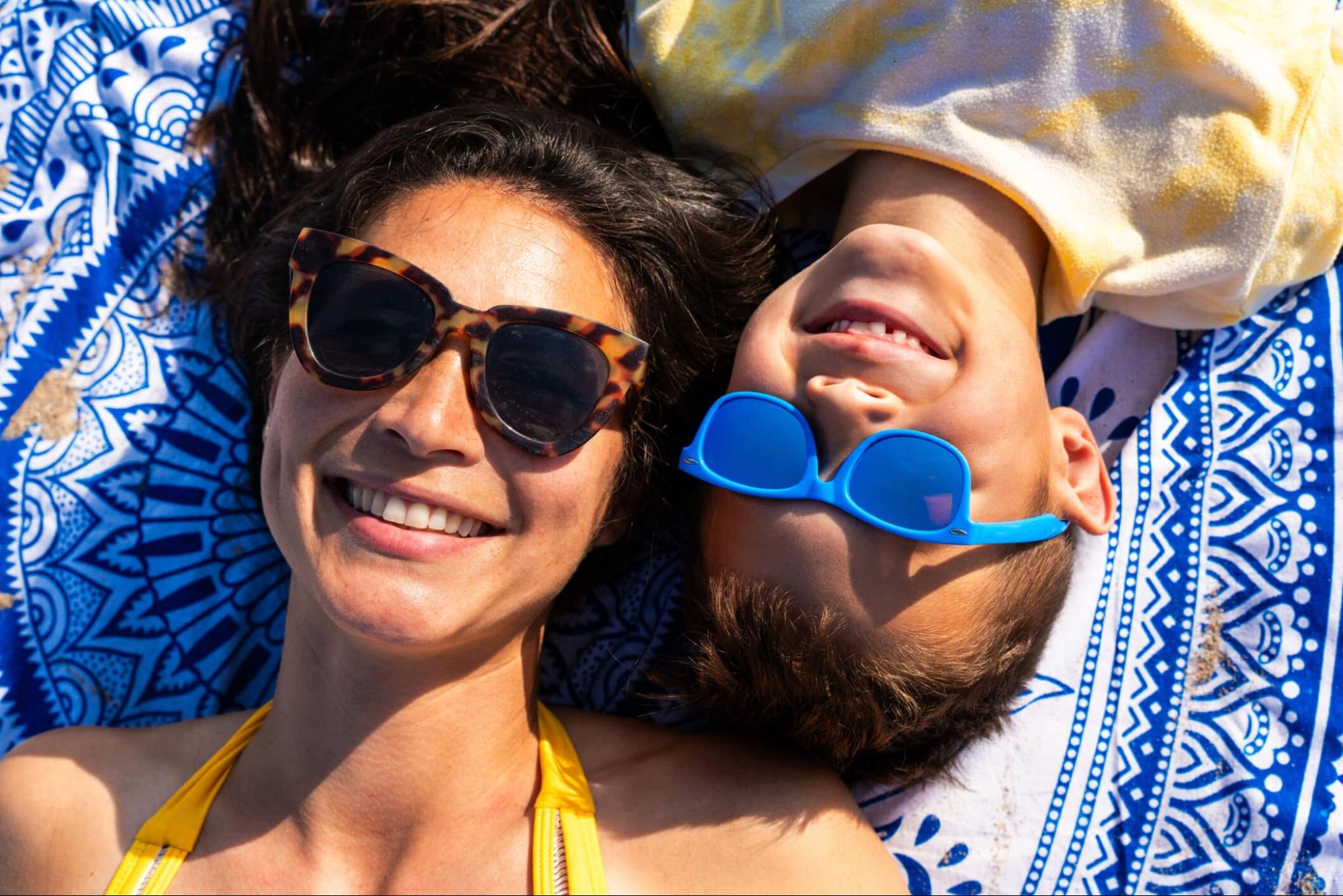
Grabbing a pair of sunglasses off the rack without thinking twice works fine for adults. For children, the wrong pair, or no pair at all, can cause harm that compounds over decades.
The difference between adult and kids' sunglasses goes beyond size. Frame construction, lens material, UV specifications, and fit all work differently for a child’s developing eyes than for an adult’s fully formed ones. Parents buying for a six-month-old, a seven-year-old, or a teenager about to transition out of the kids’ aisle will make a smarter purchase by understanding those differences.
Why Children’s Eyes Need Different Protection
Children’s eyes allow roughly 70% more UV light in than adult eyes, according to the Vision Council. Adult lenses yellow slightly with age, which naturally filters UV radiation. A child’s lens is clear and still developing, so UV rays pass through to the retina with little resistance.
The American Academy of Ophthalmology links cumulative UV exposure to cataracts, macular degeneration, and pterygium, a noncancerous tissue growth on the eye’s surface. Since up to 80% of lifetime UV exposure happens before age 18, protection during childhood directly shapes long-term eye health.
Children also spend more time outdoors than most adults, often during peak UV hours of 10 a.m. to 4 p.m. More hours outside, less natural filtration in the lens, and eyes still forming make children’s sunglasses UV protection a medical priority, not a style choice. That context shapes every difference covered below.
The Core Differences Between Adult and Kids Sunglasses
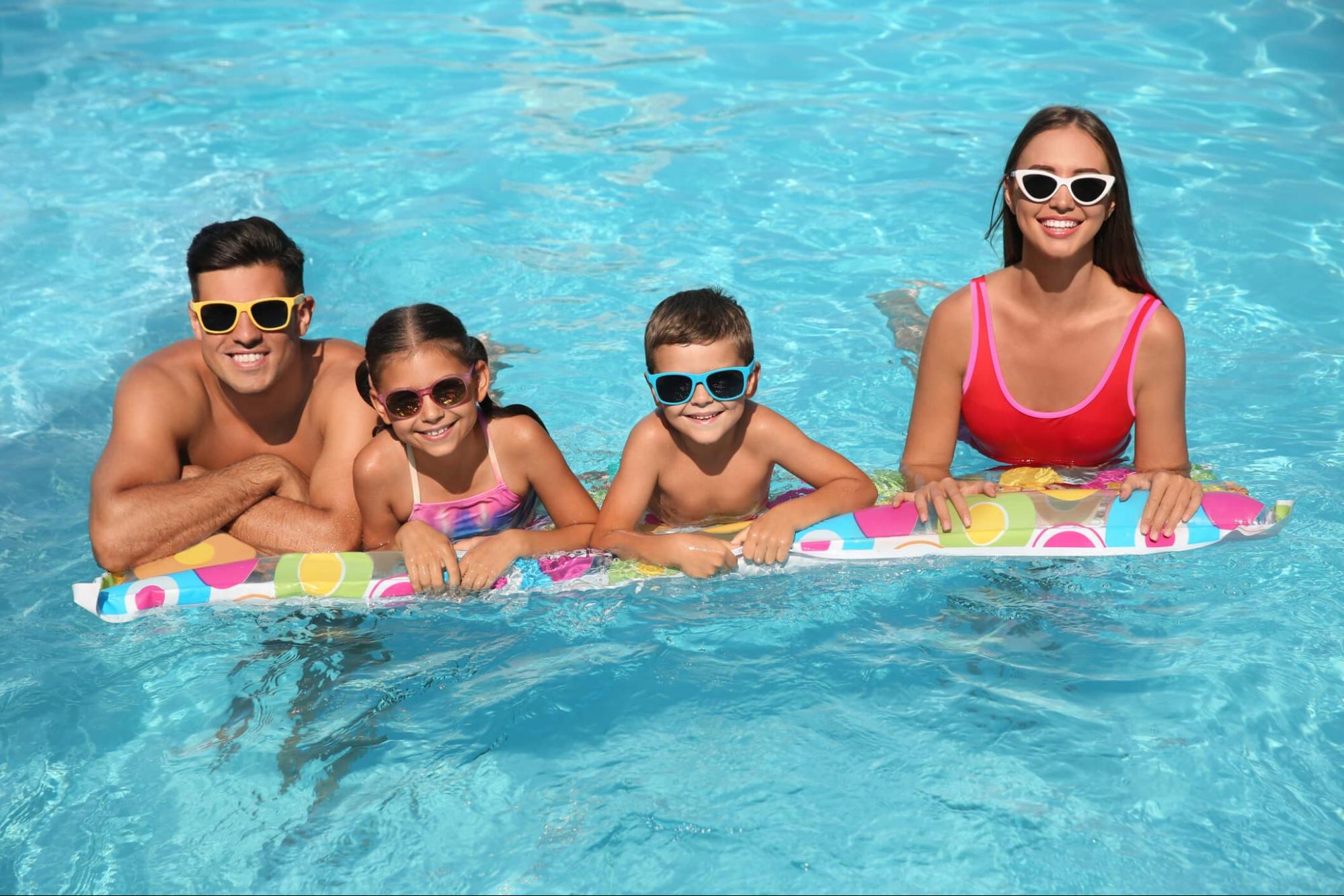
Five factors separate sunglasses built for children from those built for adults: frame size, frame material, lens material, UV standards, and coverage. Each one matters, and each one fails differently when it’s wrong.
Frame Size and Fit
Adult sunglasses use standardized measurements. A typical adult frame runs a lens width of 52–58mm, a bridge of 16–20mm, and temples of 140–150mm. Kids’ frames run smaller across every measurement: lens widths of 40–50mm, shorter bridges, and temples of 120–135mm to keep the frame from sliding down smaller noses or pinching behind smaller ears.
A frame that doesn’t fit creates two problems at once. Gaps between the frame and the face let UV rays in from the sides and above. A loose fit also means the child removes the glasses, defeating the protection entirely. Fit is not a comfort issue; it’s a coverage issue.
Frame Materials and Durability
Adult sunglass frames prioritize aesthetics. Thin acetate, lightweight titanium, and wire rims work well for someone who handles their eyewear carefully. Children’s frames are built to absorb impact. Flexible rubber or thick polycarbonate plastic is standard because kids drop things, sit on things, and throw things. Frames with spring-loaded hinges flex rather than snap when a toddler yanks them off. For children under age 6, soft rubberized frames with an elastic strap or cable temples that wrap behind the ear keep the sunglasses in place without pressure points.
The right material keeps the frame intact on the face. Both matter equally.
Lens Material
Adult sunglasses come in glass, standard plastic, polycarbonate, or Trivex. For children, polycarbonate is the right default. It is impact-resistant, lighter than glass, and far less likely to shatter than standard plastic lenses. A shattered lens near a child’s face is a genuine safety hazard. Polycarbonate absorbs impact rather than fracturing, which is why pediatric eye care providers consistently recommend it.
Lens material also affects UV protection, which brings us to the most misunderstood part of buying sunglasses.
UV Protection Standards
Surprisingly, UV protection in sunglasses has nothing to do with lens darkness or tint. A dark lens with no UV coating can cause more harm than no sunglasses at all, because the pupil dilates in reduced light while UV rays still pass through freely.
The label to look for is UV400, which means the lens blocks wavelengths up to 400 nanometers, covering both UVA and UVB rays at 99% or better. This standard applies equally to adult and children’s sunglasses. Parents need to check the label every time. A discount display with no UV certification offers no meaningful protection, regardless of how dark the lens looks.
Wrap and Coverage
Adult sunglasses often leave the sides of the eye exposed, which works for fashion frames but falls short for serious sun protection. Children’s sunglasses should wrap further around the face to block peripheral UV light. Larger lenses with a slight wrap also protect the eyelids and the thin skin around the eye, both of which are especially vulnerable in younger children.
Together, frame size, material, lens choice, UV certification, and wrap coverage define the difference between adult and kids sunglasses. The next consideration is age-specific, starting at the youngest end of the spectrum.
Baby Sunglasses: A Special Category
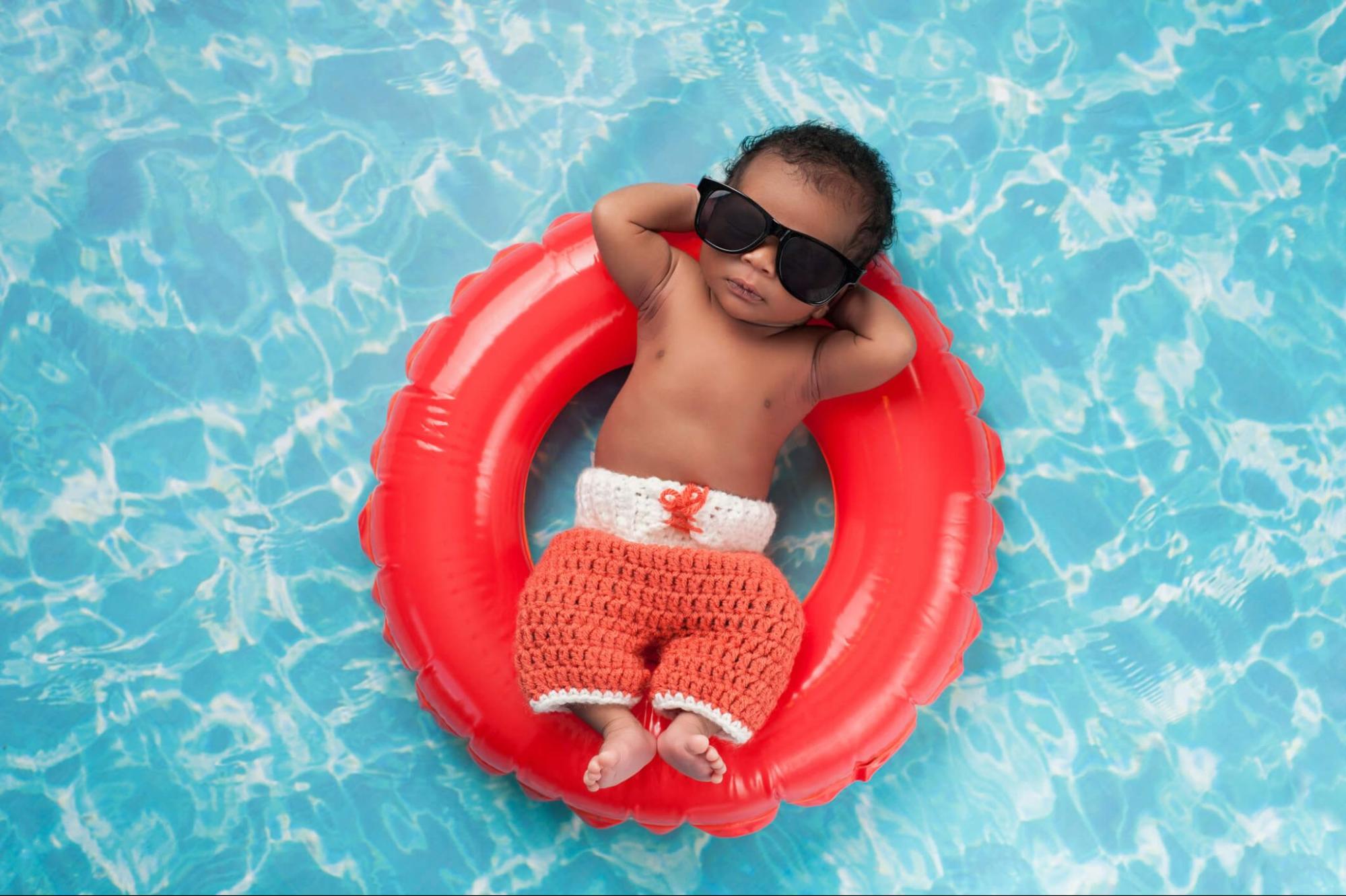
Baby sunglasses occupy their own category because an infant’s needs differ sharply from those of a toddler or school-age child. Before six months, the American Academy of Pediatrics recommends keeping babies in the shade rather than relying on eyewear. After six months, purpose-built baby sunglasses are appropriate whenever the infant is in direct sunlight.
Four features separate baby sunglasses from sunglasses for kids in older age ranges:
- Elastic Straps: An infant cannot keep glasses on their face through normal friction. A band that wraps around the back of the head keeps the lens in place.
- Softer and Lighter Frames: Baby sunglasses use flexible rubber or silicone that won’t dig into skin or cause pressure points.
- Smaller Lens Dimensions: Infant lens sizes start around 40mm or less, compared to 45–50mm for toddlers and 48–52mm for school-age children.
- BPA-free Materials: Infants put objects in their mouths. Reputable baby sunglasses are certified BPA-free.
A common mistake made by many parents is buying up a size to “grow into.” Although a good idea,, a poorly fitting frame leaves gaps and slips off constantly. Buy to fit the face the child has now. The age table below makes it easier to track when to move up.
Sunglasses for Kids by Age
Frame sizing evolves as a child grows. The table below maps age ranges to frame specifications to match the right product to the right stage.
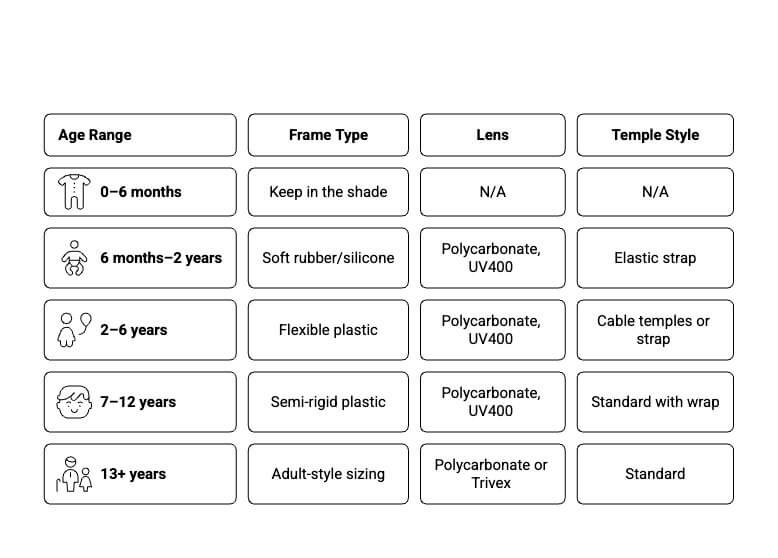
Frame measurements are a more reliable guide than the age label on the box. Once those measurements being to match adult sizing, it’s time to move out of the kids’ section entirely.
What Type of Sunglasses Protect Your Eyes Best
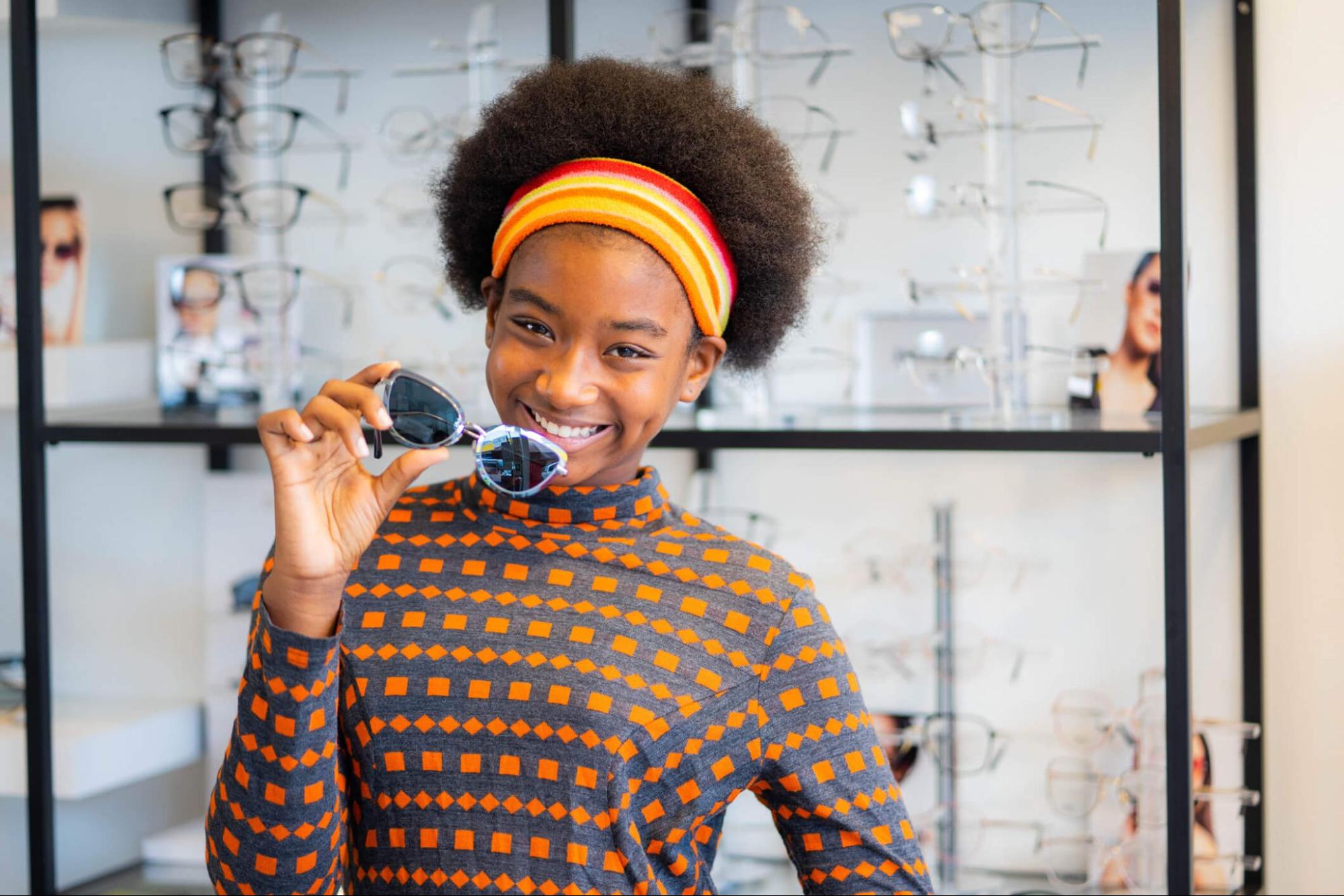
Knowing what type of sunglasses protect your eyes comes down to four factors, regardless of age:
- UV400 Certification: No label, no purchase.
- Polycarbonate or Trivex Lenses: Impact-resistant and shatter-resistant for active wearers.
- Wrap-style Frames: Larger lens surface and a slight wrap reduce peripheral UV exposure.
- Proper Fit: A lens that sits flush against the brow and cheek blocks more UV than a gap-prone frame.
For adults, protecting the eyes with polarized lenses are a worthwhile addition for driving, water, and snow, where glare intensifies UV exposure. For children, polarized lenses reduce squinting and eye strain outdoors, but they do not replace UV400 protection. A polarized lens without UV400 certification does not protect the eyes from UV damage. Polarization and UV protection are separate features, and both matter.
Can an Adult Wear Kids’ Glasses?
Adults with small or narrow faces, particularly women, sometimes find that children’s frames fit better than adult petite options. From a vision correction standpoint, this works as long as the lenses can be fitted with the correct prescription. Three practical limitations apply:
- Shorter Temples: Children’s frames typically have temples around 130–135mm. Many adults find these pinch behind the ear, or don’t extend far enough to sit comfortably.
- Thicker Frames: Children’s frames are often made from thicker plastic to improve durability. On an adult face, this can look disproportionate.
- Lens Height: Children’s lenses tend to be shorter top-to-bottom than adult frames, which can affect the positioning of progressive or bifocal prescriptions.
For sunglasses specifically, an adult wearing kids’ sunglasses gets the same UV protection as long as the lenses carry a UV400 rating and the frame fits flush with no gaps.
What Age Are Kids' Sunglasses For?
Most manufacturers label sunglasses by age range, but head size is the more reliable guide. A child measuring into adult frame dimensions at 13 can move to adult sizing; a larger-headed 11-year-old may get there sooner. Use the measurements, not the label.
Baby sunglasses start at six months. Infant and toddler styles run through roughly age 4. Kids’ frames cover ages 5 to 10. From 11 onward, a tween or small adult frame typically fits better than a standard kids’ style.
The Two Types of Sunglasses Lenses
Most people encounter one distinction when shopping: polarized versus non-polarized. That’s one axis. Lenses also differ in how they deliver UV protection.
By UV protection method:
- Standard Tinted Lenses with UV Coating: The coating is applied to the surface of the lens and can degrade as the lens scratches over time.
- UV-absorbing Lenses: The UV-blocking agent is embedded in the lens material itself, making protection more durable. Polycarbonate naturally absorbs UV, which is one reason it is preferred for children.
By glare reduction:
- Non-polarized: Block UV based on their coating or material, but do not filter reflected glare. Appropriate for most everyday wear.
- Polarized: Contain a chemical film oriented to block horizontally polarized light, the type of glare that reflects off flat surfaces like roads, water, and snow. Better for driving, water sports, skiing, and beach use.
Lens tint color does not determine UV protection level. A pale amber lens with UV400 certification protects eyes better than a dark black lens without it. Darkness signals nothing about safety. The certification does.
Who Should Not Wear Polarized Sunglasses?
Polarized lenses work well for most people, but a few situations call for non-polarized lenses instead:
- Pilots who use Aircraft instruments and LCD screens can appear distorted or washed out through polarized lenses, creating a safety concern during flight.
- Drivers rely on LCD navigation or dashboard displays. Polarized lenses can reduce the readability of screens using liquid crystal technology.
- Skiers in certain conditions. Icy patches on slopes can be harder to spot through polarized lenses because the glare that signals ice is filtered out.
- People with certain visual impairments. Anyone who relies on light differential cues for depth perception may find polarized lenses disorienting.
For children, there are no contraindications to polarized lenses in everyday or sports use, provided the lenses also carry full UV400 protection. Polarization is a benefit, not a requirement, but it adds real comfort for kids who spend long stretches outdoors.
Shopping Checklist: Kids Sunglasses vs. Adult Sunglasses
Every sunglass purchase comes down to the same eight variables. The right answer for a child differs from the right answer for an adult on most of them, and on a few, it differs significantly.
Use this checklist when comparing options for any age group.
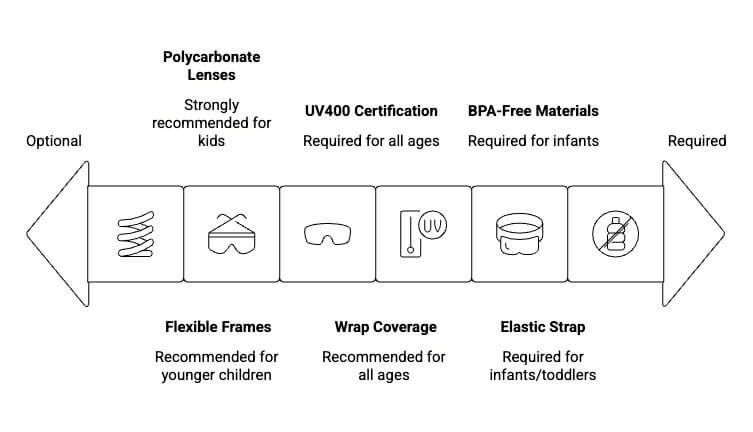
UV400 certification and wrap coverage are the only two features that apply equally to every age. Everything else scales to the size, age, and activity level of the wearer.
Shading Kids’ Eyes From the Start
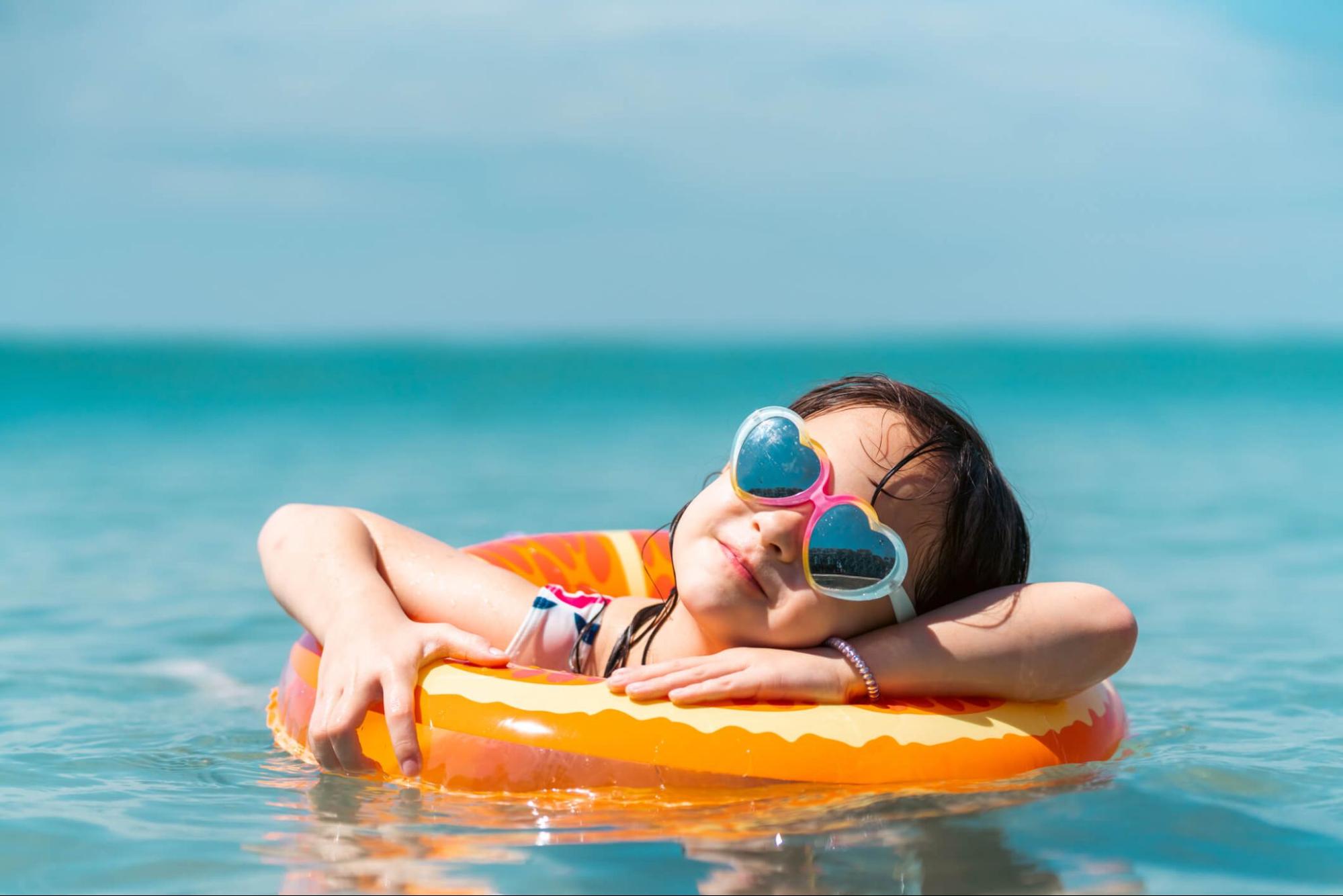
Children are active and accumulate most of their lifetime outdoor sun exposure before they finish high school. The habits and gear established now carry forward into adulthood. Sunglasses for kids are purpose-built protection for eyes that are more vulnerable, more exposed, and still developing, not a smaller version of adult eyewear.
When buying sunglasses for any age, UV400 lenses and a frame that fits flush are the two non-negotiables. Polarization, tint, and frame style all sit on top of that foundation. Get those two things right, and everything else is preference.
When buying sunglasses for any age, UV400 lenses and a frame that fits flush are the two things that matter above all else. Polarization, tint, and frame style all sit on top of that foundation. Get those two things right, and everything else is preference.
Browse PerfectLensWorld's sunglasses collection for UV-protective options across all ages.
Frequently Asked Questions About Kids and Adult Sunglasses
Can an Adult Wear Kids’ Glasses?
Yes, if the frame fits well and the lenses carry UV400 certification. The main limitations are shorter temples and thicker frames that may not suit adult preferences, and lens height that can interfere with progressive prescriptions.
What Age Are Kids' Sunglasses For?
Purpose-built sunglasses for kids start at 6 months for infants and cover children through roughly age 12–15, depending on head size. Most teenagers fit standard adult sizing.
What Are the Two Types of Sunglasses?
The most practical distinction is between polarized and non-polarized lenses. Polarized lenses filter reflected glare from flat surfaces. Non-polarized lenses block UV based on coating or lens material without glare reduction. Lenses also differ by whether UV protection is a surface coating or embedded in the lens material itself.
Who Should Not Wear Polarized Sunglasses?
Pilots, drivers who rely on LCD displays, and some skiers should avoid polarized lenses due to reduced screen readability and altered depth perception on reflective surfaces. For children, polarized lenses are safe and beneficial for outdoor activities when paired with UV400 certification.

