


Why Foldable Sunglasses Are a Must for Travel

Packing for a trip usually requires a series of compromises. You want to bring your best gear, but space in a carry-on or a small personal item bag is often limited. Standard sunglasses cases are a major culprit in this space war because they are bulky, rigid, and take up significant room. This is the primary reason foldable sunglasses are becoming the standard for travelers who prioritize efficiency.
The compact nature of these frames changes how often you actually reach for your eye protection. Because they fit into a pocket as easily as a phone, you are less likely to leave them behind or risk damage by tossing them loose into a bag. This practical edge makes the difference between having your shades when the sun comes out or being left squinting at the sights.
The Engineering Behind Folding Sunglasses
While they may look like a standard pair at first glance, the construction of high-quality folding sunglasses is quite sophisticated. Most traditional frames only hinge at the temples, but a foldable design incorporates additional micro-hinges at the bridge and the midpoint of the arms. This allows the entire frame to collapse into a footprint roughly the size of a single lens.
This specific design makes the glasses significantly easier to manage throughout a busy travel day. Better-made pairs use reinforced stainless steel or polycarbonate hinges to ensure the frame feels stable and secure once it is unfolded. If the hinges are built correctly, the glasses should feel as solid on your face as any fixed-frame model. This technical reliability is what allows collapsible eyewear to work so well for life on the move.
Why Collapsible Sunglasses Make More Sense for Travel
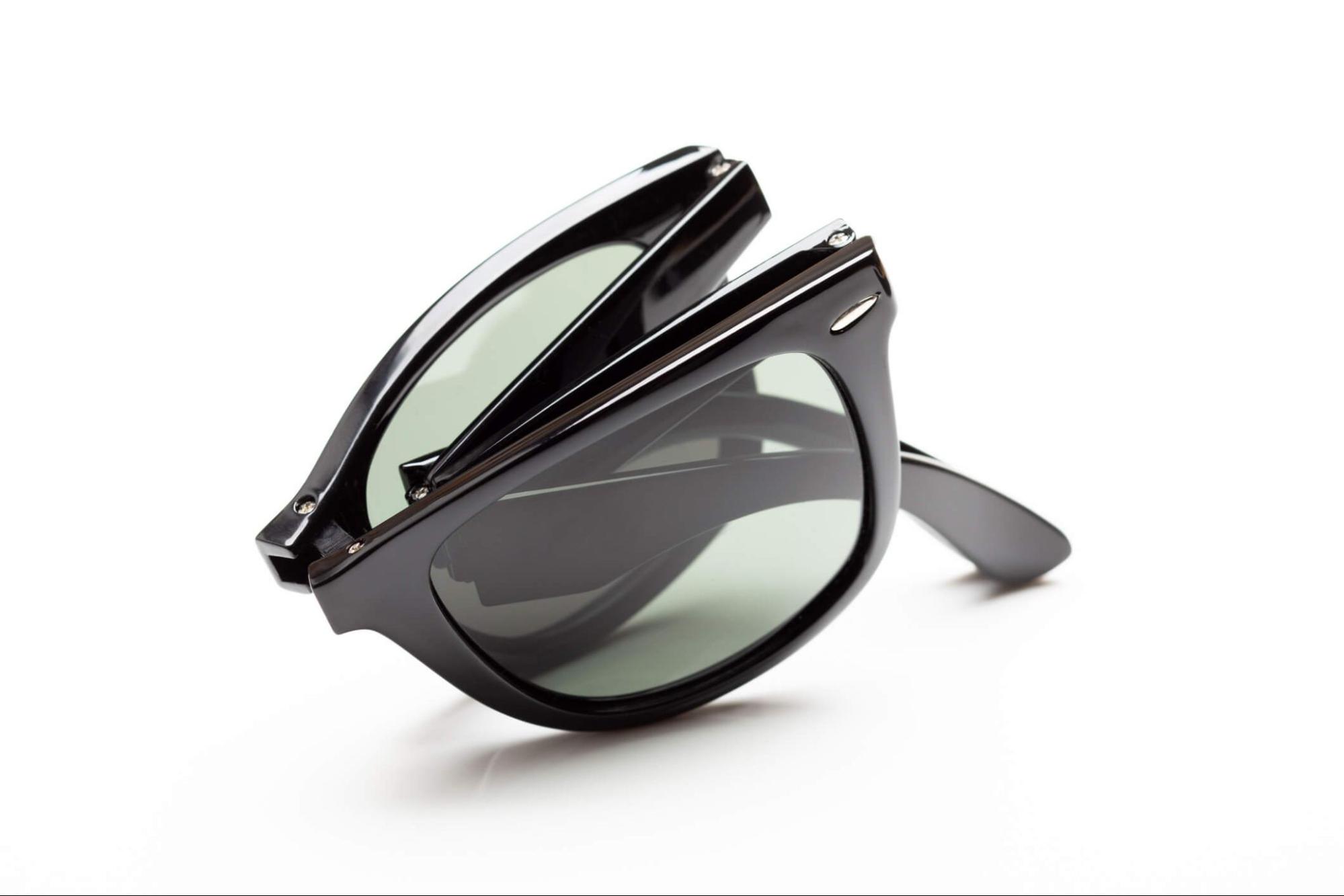
Travel space tends to disappear quickly, especially when you are trying to stick to a carry-on-only itinerary. Collapsible sunglasses fit this reality because they reduce the "dead air" that a traditional hard-shell case creates in your backpack. When your eyewear can shrink by over fifty percent, you gain back valuable real estate for other essentials like chargers or passports.
This size reduction also changes how you handle your gear during transitions. It is much easier to tuck a compact pair into a jacket pocket or a small travel organizer during a flight or a museum stop. By having a dedicated, tiny space for your glasses, you significantly lower the odds of scratching the lenses or accidentally leaving them on a cafe table. This ease of storage leads directly to better lens longevity (and for your nerves).
Understanding UV Protection Levels and Strengths
When choosing travel eyewear, it is important to distinguish between radiation protection and the darkness of the tint. While portability is the main draw of a folding frame, the lens must still meet medical standards to be effective. The following table identifies which specifications matter most for different environments.
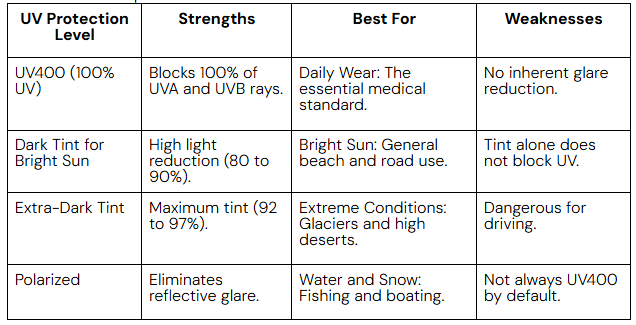
A common mistake is assuming that a darker lens equals more protection. In reality, protection comes from a clear chemical treatment, not the color of the plastic. This is why verifying the UV400 standard is the most important step before considering the portability of the frame.
Are Folding Polarized Sunglasses Worth the Investment?

For most travelers, the answer is a resounding yes. Folding polarized sunglasses combine two of the most useful features for a trip: extreme portability and significant glare reduction. This combination is especially valuable if your itinerary involves driving long distances, boat tours, or time spent near highly reflective surfaces like snow or white sand.
Polarized lenses work by neutralizing the horizontal light waves that cause blinding glare, which reduces visual fatigue during long days outdoors. While polarization is excellent for comfort, it is important to remember that it is not the same as UV protection. A reliable travel pair must offer full UVA and UVB blocking as its primary function. This health-first approach ensures your eyes are safe, while the polarization ensures your view is clear.
How to Choose Sunglasses That Protect the Eyes
Learning how to choose sunglasses becomes easier once the process is narrowed to a few useful checkpoints. Looking beyond style helps narrow the options to pairs that offer stronger coverage, clearer optics, and a more reliable fit.
- Label: The best UV protection sunglasses should clearly state 100% UVA and UVB protection or UV400. If this information is not explicitly listed, the lenses may offer no medical protection.
- Frame Coverage: Larger lenses and wraparound shapes do more to block light from the front and sides than narrow fashion frames. This is one reason many sunglasses for eye protection use broader shapes that cover more of the eye area.
- Optical Quality: Poorly made lenses can create distortion, which may contribute to headaches, nausea, and visual discomfort. If the line bends or shimmers, the lens quality may be poor.
- Fit and Daily Usability: A frame that slips, pinches, or leaves wide gaps may not perform as well during regular wear. Once the right UV standard, coverage, lens quality, and fit are in place, the product decision becomes much more grounded.
Taken together, these factors help separate a fashionable pair from one that can hold up in bright, everyday conditions. Once coverage, lens quality, and fit are reviewed alongside the UV label, the buying decision becomes much easier and more effective for your long-term health.
How to Pack Sunglasses for Travel Without Wasting Space
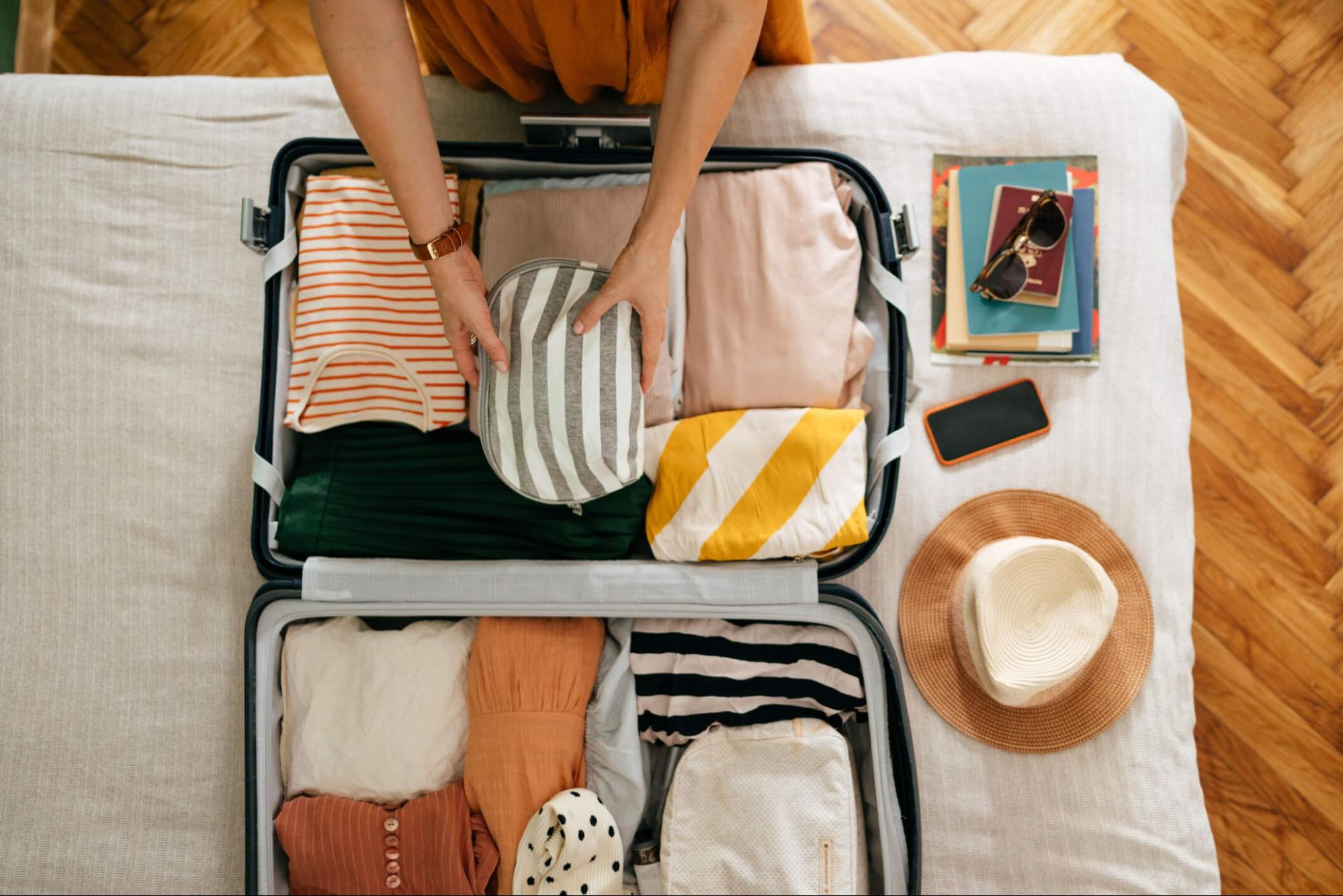
Knowing how to pack sunglasses for travel starts with a single goal: protecting the lenses without sacrificing bag volume. Even though foldable frames are durable, they should still be stored in a soft microfiber pouch or a slim-profile case rather than being left loose. This prevents other items in your bag from rubbing against the lens coating.
The advantage here is that a folded pair can slide into "gap spaces" that a standard case could never fit. You can't tuck them into the small tech pocket of a backpack, a crossbody bag, or even the hidden pocket of a travel vest. By keeping the frames fully collapsed and tucked away, you keep your packing setup organized and ensure your eyewear is always within reach when you step back out into the sun.
Taking Off With the Right Travel Eyewear

Travel gear earns its place in your bag by solving a real-world problem. Foldable sunglasses accomplish this by removing the bulk of traditional cases and giving you a more practical way to carry protection from one destination to the next. They prove that you do not have to choose between packing light and taking care of your vision.
For travelers looking for the right balance of function and style, PerfectLensWorld provides options that prioritize both safety and portability. A strong pair of sunnies is a must-have piece of travel equipment that supports your comfort and health throughout every journey.
Common Questions About Travel Eyewear
Are Foldable Sunglasses Worth Buying?
For frequent travelers and commuters, they are an excellent investment. Their biggest benefit is the convenience of fitting where standard frames cannot, making them much more likely to be used regularly. They also serve as an ideal backup pair to keep in a glove box or a daily tote.
Do Eye Doctors Recommend Polarized Sunglasses?
In many outdoor settings, yes. Doctors often suggest polarized lenses for environments with high glare, such as near water or snow, because they improve visibility and reduce eye strain. However, they always emphasize that these lenses must be paired with full UV400 protection to safeguard the health of the eye.

