


Is It Safe to Use Eye Drops for Contacts? Here's the Truth!

Contact solution and eye drops may look similar on the shelf, but they are not made for the same job. When in a pinch, contact solution should not be used as eye drops, and eye drops should not be used as contact solution. Those two products serve different purposes, have different ingredients, and formulas prevent each from being a substitute for the other.
So, if contact lens solution is not the right product for eye relief, what is? The answer depends on the problem. Some products are made to clean and store lenses, some are made to lubricate the eye, and some are made specifically for contact lenses. This guide breaks down what the different types of eye drops actually do, which drops are safe to use with contacts, and eye-safe alternatives for unexpected emergencies.
Contact Solution vs. Eye Drops: What Makes Them Different?
The confusion between contact lens solution and eye drops is understandable. Both small bottles often live next to each other in the same medicine cabinet or refrigerator and help repair the eyes. However, the difference lies in what each product is formulated to do.
Contact Lens Solution
Contact solution works on the lens. Eye drops work on the eye. That may seem like a small distinction, but it changes the ingredient profile, intended use, and safety expectations entirely.
Contact lens solution, whether multipurpose, hydrogen peroxide-based, or saline, is engineered to clean, disinfect, and store contact lenses.
It contains:
- Disinfectants and preservatives to kill bacteria and prevent microbial growth on lens surfaces.
- Surfactants that break down oil, protein deposits, and debris that accumulate with wear.
- Buffering agents to maintain a pH compatible with the lens material, not necessarily with living ocular tissue.
Eye Drops
Eye drops, by comparison, are formulated for the surface of the eye itself. They are designed to hydrate, lubricate, medicate, or reduce redness in eye tissue. They are not made to clean plastic lenses.
The ingredients that make contact solution effective at cleaning lenses are precisely what make it unsuitable for direct eye use. Disinfectants and surfactants that remove organic material from a lens can disrupt the eye's natural tear film and irritate the cornea when applied directly.
Understanding this ingredient-level difference is the foundation for everything that follows.
Can You Use Contact Lens Solution as Eye Drops?
Contact lens solutions, including multipurpose solutions and hydrogen peroxide-based solutions, should never be used directly in the eyes as a substitute for eye drops. This applies regardless of whether contacts are being worn at the time.
The misconception often starts with the logic that contact lenses sit directly on the eye, so anything safe for lenses must be safe for the eyes. That logic is flawed in the fact that the surface of a soft or rigid gas-permeable contact lens is chemically and biologically different from living ocular tissue. Ingredients calibrated to clean and preserve a polymer lens can react very differently with the cornea, conjunctiva, and tear film.
In other words, can you use eye contact solution as eye drops, and can you use contact lens solution as eye drops?
Here’s how they affect the eyes with and without contact lenses.
- Hydrogen peroxide-based solutions carry the clearest risk. These formulas rely on a neutralizing disc or tablet in the lens case that converts active peroxide to sterile saline over several hours. Before that neutralization is complete, the solution contains active hydrogen peroxide that can cause significant burning and corneal damage if it enters the eye directly.
- ultipurpose solutionsM carry a lower but still real risk. The preservatives and disinfecting compounds they contain, such as polyhexamethylene biguanide (PHMB) or polyquaternium-1, are effective at killing microorganisms on lens surfaces but can irritate ocular tissue with repeated direct exposure. Regular use of contact solution as an eye drop can damage the tear film and lead to persistent dryness.
The Food and Drug Administration (FDA) advises contact lens wearers to use only contact lens solution to store or rinse contacts and to use only the lens solutions and eye drops recommended by an eye doctor. Lens products and eye products should be used as directed, and they are not designed to replace one another.
The same logic applies in reverse: eye drops should not be used as a substitute for contact lens solution. Eye drops do not disinfect. Cleaning lenses with eye drops leaves proteins, bacteria, and debris on the surface, which is a significant infection risk.
What Happens If Contact Solution Gets in the Eyes?

A small amount of residual contact solution on a lens that then enters the eye is generally not a concern, as trace amounts are considered safe. The risk rises with direct, significant, or repeated exposure.
Possible effects of contact solution used directly as an eye drop include:
- Stinging or burning sensation immediately upon contact.
- Redness and irritation of the conjunctiva.
- Watering or tearing as the eye attempts to flush the irritant.
- Disruption of the natural tear film, leading to dryness.
- In hydrogen peroxide cases without neutralization: corneal burns and significant pain.
In some cases, discomfort may be mild and short-lived. Even so, temporary relief should not be confused with safe use. Ongoing discomfort after contact solution enters the eye should not be ignored.
If contact solution accidentally enters the eye in a larger amount, the recommended response is to remove contact lenses immediately and rinse the eye thoroughly with clean, lukewarm water. If burning or pain persists, contact an eye care professional.
Flushing the eye with contact solution intentionally, whether as a rinse or an emergency eye wash, is not advisable. Even saline-based contact solutions can contain preservatives not intended for direct ocular application. Clean water or a dedicated sterile eye wash is the appropriate choice for flushing the eye.
The Main Types of Eye Drops and What They Actually Do
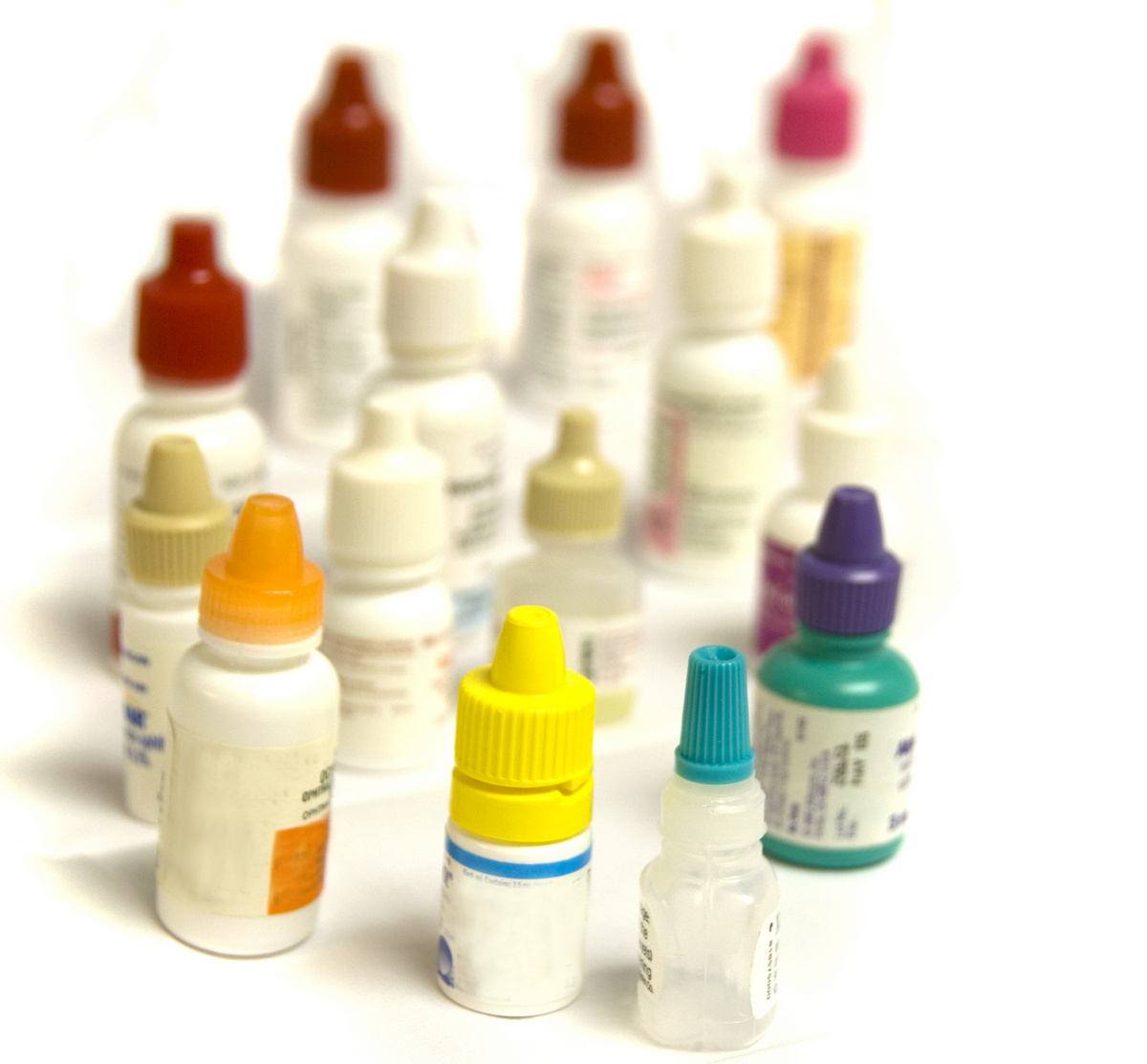
Not all eye drops are created equal, and not all of them are safe to use with contact lenses. Understanding the categories helps contact wearers make informed choices both with and without lenses.
1. Contact Lens Rewetting Drops (Safe With Contacts)
Contact lens rewetting eye drops, also called rewetting drops for contact lenses, are one category specifically formulated for use while wearing lenses. These drops rehydrate the lens and lubricate the surface of the eye simultaneously, making lens wear more comfortable throughout the day. Unlike other types of eye drops, rewetting drops are designed with contact lens compatibility in mind from the start.
The 2020 study, Contact Lens and Anterior Eye (Pucker, 2020), found that preservative-free artificial tears and rewetting drops are generally safe and effective for use with contact lenses.
Comfort drops may also help keep lenses cleaner and support overall ocular surface health. Non-preserved formulas are particularly recommended to minimize the risk of irritation from preservative absorption into soft lens material.
Rewetting drops are clearly labeled. Look for phrases like "for use with contact lenses" or "contact lens relief" on the packaging. They can typically be used multiple times per day and are shelved next to contact lens solutions at most pharmacies.
2. Artificial Tears and Dry Eye Drops (Use With Caution)
Artificial tears are formulated to mimic the natural tear film and provide moisture relief for dry eyes. They range from thin, watery formulas to thicker, gel-like preparations, and that viscosity difference matters for contact wearers.
Thicker, higher-viscosity dry eye drops present the most risk for contact wearers. Their oil-based or gel ingredients can coat the surface of a contact lens, causing cloudy vision and increasing deposit buildup. Thin, preservative-free artificial tears clearly labeled as contact-lens compatible are generally acceptable, but contacts should typically be removed first, and the packaging should always be checked for explicit compatibility language.
Standard over-the-counter dry eye drops that lack a "safe for contacts" designation should be used only after removing lenses and waiting the time recommended on the label before reinserting.
3. Anti-Redness Eye Drops: Can You Use Visine With Contacts?
Anti-redness drops, including popular products like Visine, work by constricting the tiny blood vessels in the white of the eye using active ingredients called vasoconstrictors. The result is a whiter appearance, but the mechanism creates specific problems for contact lens wearers.
Per the Cleveland Clinic, vasoconstriction interacts with contact lens materials, leaving deposits on the lens surface that worsen redness over time. Prolonged or frequent use of contact lenses can lead to rebound redness, a cycle in which the eye becomes increasingly red once the drops wear off. Redness-relief drops are not recommended for use with contacts and should be avoided while lenses are in.
This is one of the main reasons why checking the bottle label and product instructions first matters. If redness becomes a chronic issue while wearing contacts, contact an optometrist rather than attempt to mask it with anti-redness drops.
4. Medicated Eye Drops
Prescription eye drops, whether for infection, inflammation, glaucoma, or allergies, are not intended for use while wearing contact lenses. The active ingredients can absorb into the lens material rather than penetrating ocular tissue, reducing therapeutic effectiveness. In other cases, they can cause lens deposits or discoloration.
The standard guidance for medicated drops is to remove contacts before applying the drops, wait at least 15 minutes, and confirm with the prescribing eye doctor whether lens wear should continue during the treatment course.
Can I Use Eye Drops With Contacts?
Using eye drops with contacts is not a simple “yes” or “no” answer. It depends entirely on the type of drop.
Here is a helpful reference for contact lens eye drop compatibility:
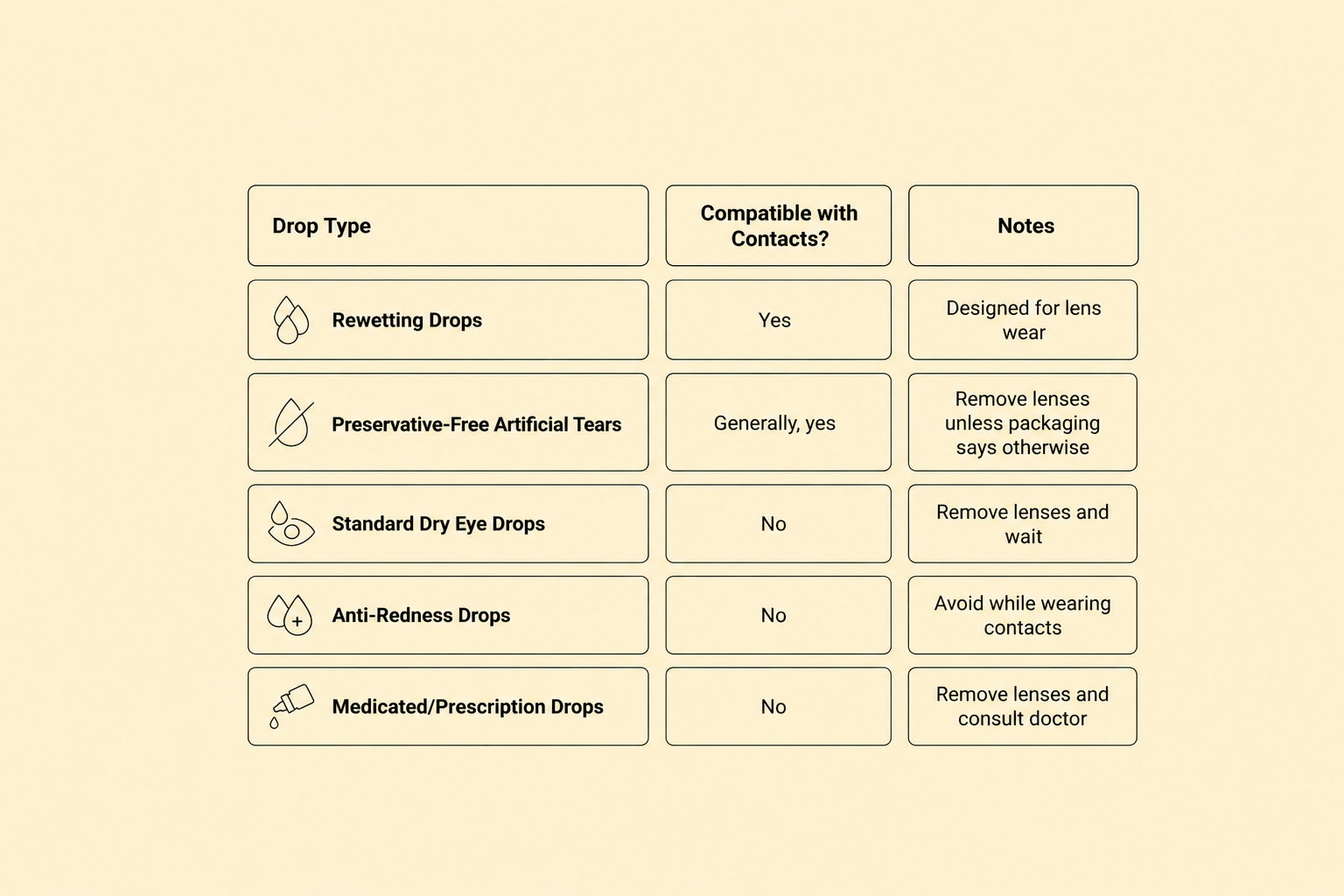
A reliable rule of thumb: if the packaging does not clearly state that a product is safe for use with contact lenses, remove lenses before applying the drops and wait at least 15 minutes before reinserting.
Contact wearers who find themselves reaching for drops frequently throughout the day may benefit from speaking with an optometrist. Persistent dryness or discomfort can sometimes point to a lens type, replacement schedule, or wearing-time issue that dropping alone will not solve.
What to Do If Contact Solution Was Used as Eye Drops
Mistakes happen, and the response should be simple and calm. Stop using the solution as an eye drop right away. If a lens is in the eye, remove it unless removal causes sharp pain or significant difficulty. After that, monitor for burning, redness, tearing, blurred vision, or lingering irritation.
Rinse the eye thoroughly with clean, lukewarm water. If symptoms settle quickly and no lasting discomfort develops, the situation is likely minor. If burning or pain does not subside, contact an eye care professional promptly. Hydrogen peroxide-based solutions that have not been neutralized require prompt medical attention.
This is also the point where trying to push through discomfort stops making sense. If symptoms do not settle quickly, lens wear should pause. The eye surface usually makes it clear when something is off, and that is not the time to keep experimenting with substitutes.
When Contact Solution Should Not Be Used and Habits That Prevent Mistakes
Beyond the eye drops, there are other situations where reaching for contact solution is the wrong move. Knowing where the boundaries are helps prevent avoidable lens and eye health problems.
Contact solution should not be used in the following situations:
- To flush a foreign object out of the eye.Use clean water or a sterile eye wash instead.
- Past the expiration date.Disinfecting efficacy decreases after expiration, and the solution should be discarded.
- To top off old solutions in a lens case.Diluting old solutions reduces their disinfecting power. Replace the entire contents with fresh solution every time.
- As a substitute for tap water.Tap water can harbor microorganisms, including Acanthamoeba, which can cause a serious corneal infection.
- As a substitute for contact lens rewetting drops.Contact solution does not lubricate the eye and is not built for direct ocular application.
Safer lens hygiene habits also help prevent mix-ups between contact solution and eye drops. Store contact solution, contact lens rewetting drops, and any other eye medications in separate places so that they are easy to distinguish during a rushed moment. Avoid using unlabeled travel containers. Replace open bottles on schedule, and keep a backup pair of glasses available on dry-eye days or when irritation starts early.
If contact solution is truly unavailable and lenses need to be stored, the safest option is to keep lenses in a clean, dry storage case and leave them out until proper solution can be obtained. Wearing lenses that have not been properly disinfected carries a higher infection risk than skipping a day of wear.
Choosing the Right Contact Lenses for Long-Term Comfort
Frequent dryness, discomfort, or a daily need for rewetting drops can sometimes signal that a lens type or wearing schedule is worth updating. Daily disposable lenses are replaced every day, which means no overnight protein buildup, no cleaning routine, and a fresh lens each morning. For those who experience lens-related dryness, daily lenses are often the first adjustment recommended by eye care professionals.
Silicone hydrogel materials, available across a wide range of lens brands, allow significantly more oxygen to pass through to the cornea compared to traditional hydrogel lenses. That improved breathability can translate to greater comfort, especially during longer wear days.
The Bottom Line on Contact Solution and Eye Drops
Contact solution and eye drops are not interchangeable substitutes for one another. Contact lens solution is built to clean and disinfect lenses. Eye drops are built to treat and lubricate the eye, and contact lens rewetting drops are made specifically for moisture and comfort during contact lens wear.
Keeping the right supplies on hand and being aware of what each product is designed to do is the best way to avoid either problem.
PerfectLensWorld carries a wide selection of contact lens brands and types, including daily, weekly, monthly, toric, multifocal, and color contacts, making it easy to find the lens that fits any prescription, lifestyle, and comfort needs.
Contact Solution vs. Eye Drops: Answers to the Questions Contact Wearers Ask Most
What Happens if Contact Solution Is Used As Eye Drops?
Contact solution can cause stinging, burning, redness, watering, and dryness when placed directly in the eye. The disinfectants and surfactants in most contact solutions are not formulated for direct ocular application and can disrupt the eye's natural tear film. Some cases stay mild and short-lived, but ongoing discomfort should not be ignored.
Hydrogen peroxide-based solutions carry the most serious risk: if the peroxide has not been neutralized, direct eye contact can cause a chemical burn. If contact solution gets into the eye in a significant amount, remove any lenses immediately, rinse thoroughly with clean lukewarm water, and seek medical attention if burning or pain does not subside.
What Can Be Used Instead of Eye Drops?
The right alternative depends on the situation. For dryness or mild lens discomfort during contact lens wear, contact lens rewetting drops are the appropriate choice.
For general irritation or a foreign body sensation, sterile saline or clean water can be used to rinse the eye. If experiencing persistent discomfort, redness, or any concern beyond mild dryness, removing the lenses and contacting an eye care professional is the recommended step.
When Should Contact Solution Not Be Used?
Contact solution should not be used as eye drops, used past its expiration date, used past the manufacturer-recommended period after opening, or used to top off old solution already sitting in a lens case.
It should never be used to flush the eye during an emergency, and it should never replace rewetting drops for in-eye comfort during wear.

