


Contact Lens Stuck in Eye? 6 Fast Tips for Safe Removal

The sudden realization that a contact lens is missing or trapped causes immediate alarm. Blurry vision, irritation, and the stinging sense that something is trapped under the eyelid often trigger worry that the contact lens will get stuck behind the eye structures. In most cases, a lens cannot travel behind the eye.
While a lens can hide under the upper or lower eyelid, it remains on the front surface of the eyeball. Understanding this anatomical boundary gives some reassurance, but discomfort and temporary vision disruption can occur.
Let’s explore the best options for finding and removing a contact lens that gets lost in the eye.
How to Tell if a Contact Lens Is Still in the Eye
The conjunctiva, a thin and clear membrane, covers the white part of the eye and loops back to line the inside of the eyelids. This creates a sealed pouch that prevents any object from sliding into the back of the eye socket.
In fact, the American Academy of Ophthalmology (AAO) confirms that a contact lens cannot move behind the eye because of this protective tissue barrier.
But vision changes and irritation often remain, even after removal, which complicates a self-assessment. Recognizing specific physical cues helps distinguish between a displaced lens and simple dry eye irritation.
Common signs that a lens remains in place include:
- Blurred or fluctuating vision in one eye
- A gritty, scratchy, or "foreign body" sensation
- Excess tearing and redness
- Sensitivity to light
A folded lens may be difficult to see, appearing only as a translucent bump or a faint line near the edge of the eyelid. To check for a contact lens lost in eye crevices, wash your hands thoroughly and stand in front of a well-lit mirror.
Gently pull the upper lid upward while looking down, then pull the lower lid downward while looking up. If vision in one eye improves after removing a confirmed lens from the other, that comparison often indicates a lens is still present.
Once the object is located, the process of retrieval can begin using the tips below with a calm and careful technique.
6 Tips for Dealing With a Stuck or Broken Lens
Managing a trapped lens requires a deliberate strategy to protect the eye’s delicate surface. Follow these specific steps to safely navigate the removal process and prevent accidental injury to the ocular tissue.
1. Wash and Dry Hands
Clean hands limit bacterial transfer. Use mild soap and avoid lotions that could transfer to the eye.
2. Hydrate the Eye
Use preservative-free saline or rewetting drops. Moisture loosens lenses that adhere to the cornea, allowing them to slide back into position.
3. Look in Different Directions
Shifting the gaze upward, downward, and side-to-side can move a hidden lens into view.
4. Massage the Eyelid
Close the eye and use a fingertip to massage the lid in light, circular motions. This often coaxes a tucked lens toward the center.
5. Flip the Eyelid
If the lens is trapped under the upper lid, look down and gently pull the lid outward to create space for the lens to drop.
Once the lens is visible, slide it to the white part of the eye and remove it with clean fingertips.
Successfully knowing how to get a stuck contact out of your eye prevents the need for an urgent doctor visit in most cases. However, knowing when to stop and seek help from an eye doctor or medical doctor is just as important as the removal itself.
Contact Lens Discomfort Symptom Comparison
Quickly assessing the severity of the situation helps decide whether to continue with home care or seek professional assistance.
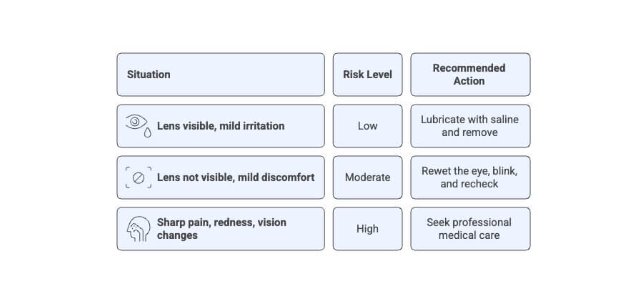
Categorizing these symptoms provides a clear roadmap for resolving the issue safely. If the situation falls into the moderate or high-risk categories, understanding the potential long-term consequences to eye health becomes the next priority.
Risks and Long-Term Care
As previously discussed, ignoring a trapped lens introduces several threats to the surface of the eye. According to The Cleveland Clinic, a corneal abrasion, or physical scratch, can occur if a dry or broken lens rubs against the cornea during blinking.
If pathogens enter these micro-scratches, they can lead to bacterial keratitis, a painful infection that requires medical intervention. Localized swelling often follows as the body responds to the persistent irritation of a foreign object. These conditions require prompt attention to avoid lasting eye problems.
Sleeping with a stuck or broken lens is not recommended under any circumstances. When the eyes are closed, reduced oxygen flow and trapped bacteria create an environment where infections multiply at an accelerated rate. If removal proves difficult at night, use preservative-free saline drops and make gentle attempts to shift the lens.
Should these efforts fail and discomfort escalates, seeking care at an urgent care facility is the safest choice. Taking these precautions reduces the likelihood of permanent scarring and helps return the eyes to comfortable, clear vision.
Consistent care routines and high-quality lens materials serve as the most effective defense against these disruptions to daily life. Maintaining a strict contact lens replacement schedule helps the eyes stay healthy and free from irritation.
Best Practices for Preventing a Contact Lens from Being Lost in the Eye
Most issues involving a contact lens stuck in the eye remain manageable with patience and the right tools, but persistent symptoms should never be ignored. Maintaining a clean lens storage case and using fresh and multi-purpose solutions significantly lowers the chance of a lens becoming dry or damaged.
Routine eye exams and a commitment to proper hygiene provide the best defense against ocular discomfort. By prioritizing these simple steps, the risk of feeling like a contact lens stuck behind the eye or other injuries remains low.
PerfectLensWorld specializes in premium contact lenses and eyewear tailored to fit your vision needs.
FAQ: Managing Stuck Contacts
Can a Contact Go Behind Your Eye?
No. The conjunctiva forms a continuous barrier that makes it impossible for a lens to travel to the back of the eye socket. It may slide out of sight, but it is always on the front surface of the eye.
What Happens if You Can’t Get Contact Lenses Out?
Failure to remove a lens can lead to swelling or infection. Medical professionals use magnification and sterile tools to remove displaced lenses safely without damaging the cornea.
Is a Contact Stuck in the Eye an Emergency?
Most cases resolve with lubrication at home. However, immediate medical attention is necessary if you experience severe pain, sudden vision loss, discharge, or intense light sensitivity.
Will a Stuck Contact Eventually Come Out?
A lens will not dissolve or disappear on its own. While blinking might shift it, lenses that remain folded or adhered to the surface typically require manual removal to prevent irritation.
Is It Okay to Sleep With a Stuck Contact Lens?
It is not recommended. Sleeping with a lens that is already causing irritation increases the risk of infection and makes the lens even drier, making removal more difficult the next morning.
What Are the Risks of a Stuck Contact?
Risks include corneal abrasion, bacterial keratitis, swelling, and persistent redness. Early attention and removal limit these outcomes and prevent the development of serious infections.

