


Why Astigmatism Makes Lights Look Different
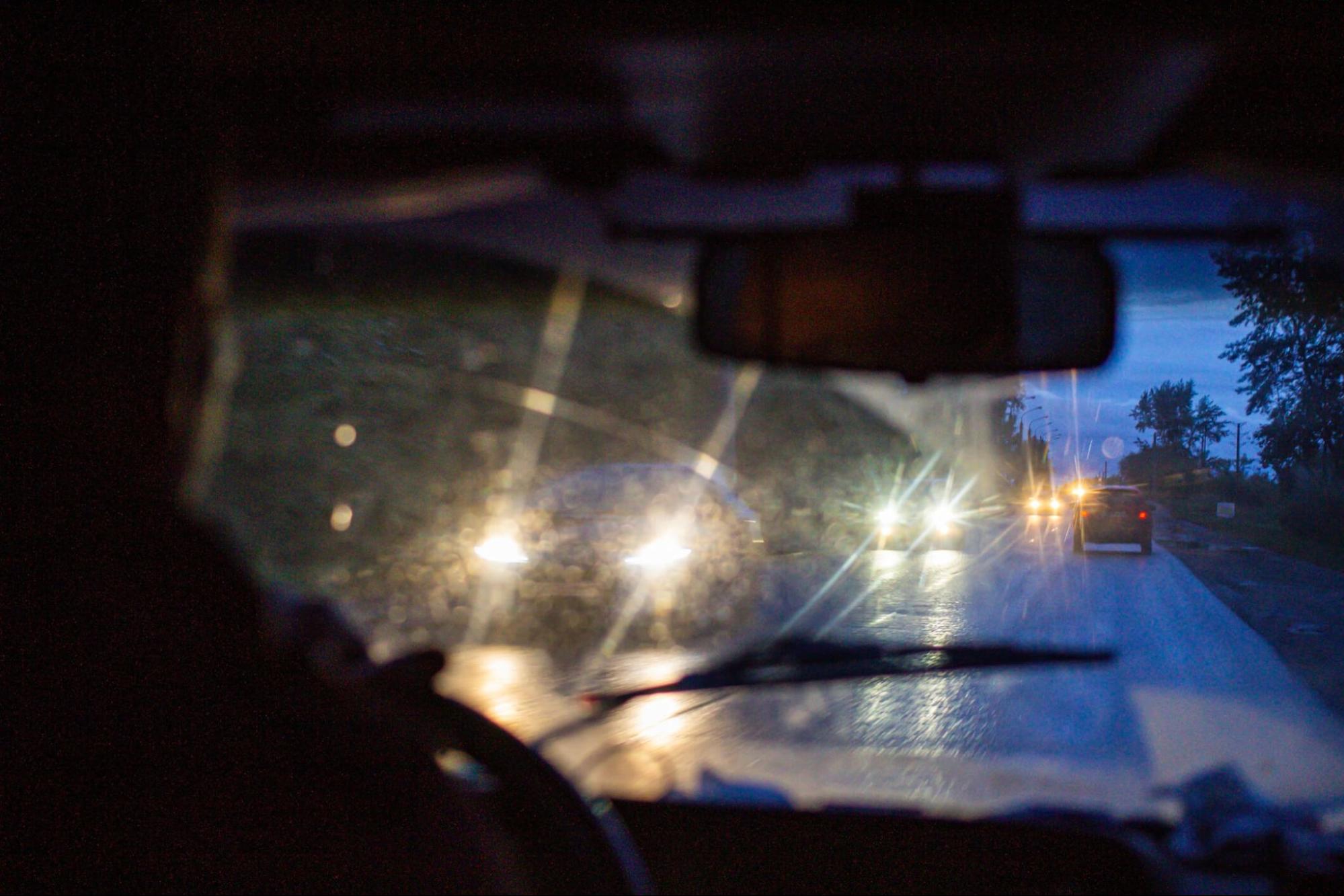
A streetlight that should appear as a clean point of light instead blooms into a starburst. Oncoming headlights spread and smear across the lane. A lit street sign that reads clearly in daylight turns into a blur of overlapping edges after dark.
For anyone with astigmatism, these are familiar experiences: not a sign that something has gone suddenly wrong, but a consequence of how an irregular cornea bends light. Understanding why astigmatism lights look the way they do, and what makes them harder to manage at night, is the first step toward doing something about it.
What Lights Look Like With Astigmatism
Astigmatism occurs when the cornea or lens is curved unevenly, shaped more like a rugby ball than a sphere. Because of that irregular surface, light entering the eye doesn't converge at a single point on the retina. It scatters, landing at multiple focal points instead of one. The result is a visual distortion that affects every light source a person looks at, from a phone screen to a streetlamp.
Lights with astigmatism don't look dim or faded. They look multiplied. A single bulb might appear to have rays radiating outward. A traffic signal might show a secondary ghost image just above or beside the real one. The specific pattern depends on the axis and degree of the astigmatism, but the common thread is that defined, point-source lights become smeared or stretched in a consistent direction.
What Do Lights Look Like With Astigmatism Compared to Normal Vision
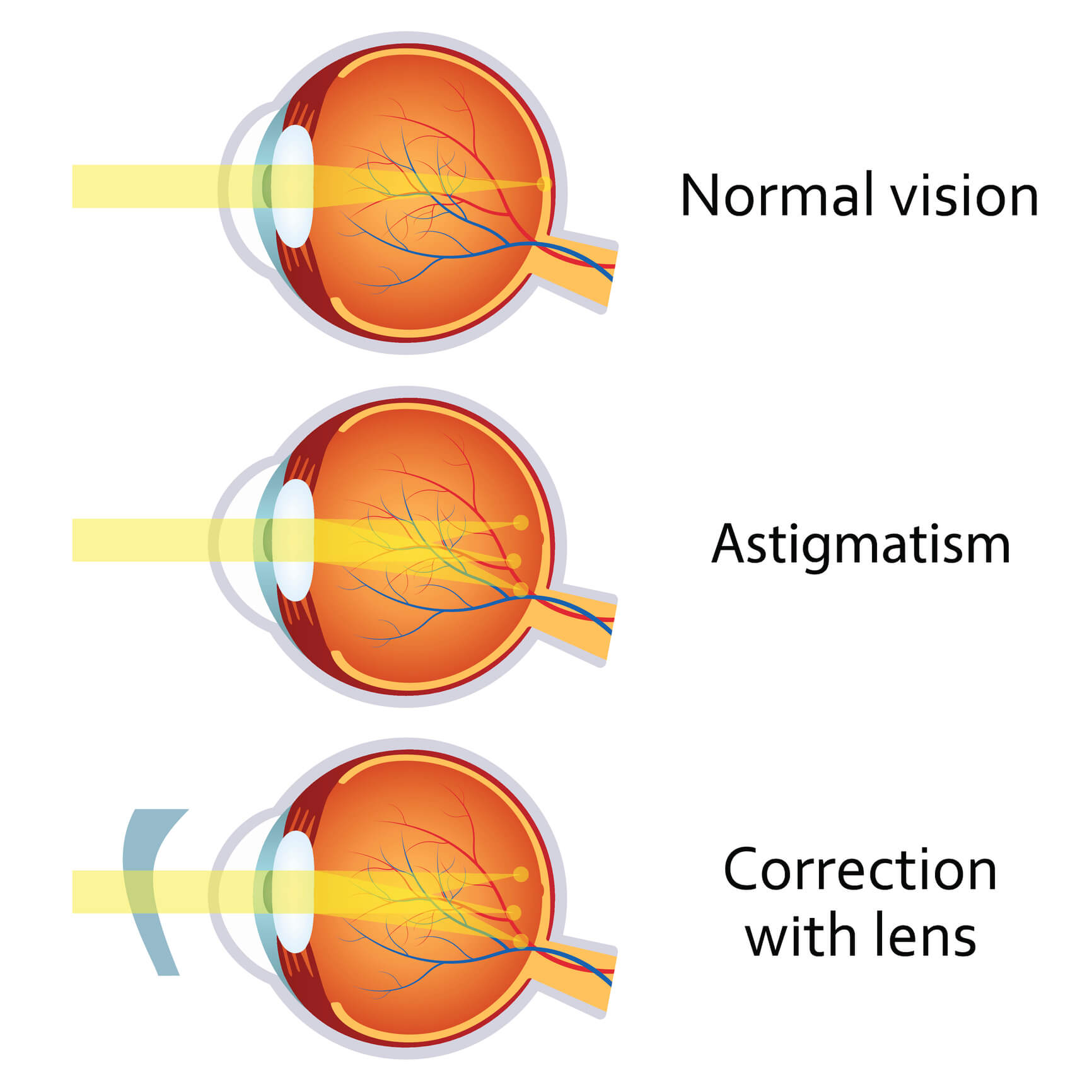
Someone with normal, uncorrected vision sees a light source as a bounded shape with clean edges. A car headlight looks like a headlight. A streetlamp looks like a contained glow.
For someone with astigmatism, the same light sources appear differently. Headlights develop tails or wings of light that extend in the direction of the irregular corneal axis. Streetlights may appear surrounded by crossed rays, like a photographic lens flare that doesn't go away when the angle changes.
The distortion is stable and predictable; it follows the same pattern with every light source, which is how it differs from random glare or a dirty lens. That consistency is what makes it diagnosable.
Astigmatism Halos Around Lights
Among the most commonly reported visual effects, astigmatism halos around lights are rings or arcs of scattered light that appear to surround a bright source. They form because the irregular cornea refracts light at multiple angles simultaneously, spreading the incoming beam into a circular diffraction pattern rather than a focused point.
Halos are most noticeable around high-contrast point sources in dark surroundings: streetlamps, traffic lights, oncoming headlights, and illuminated signs. The brighter the source and the darker the background, the more pronounced the halo appears.
This is why astigmatism halos that go unnoticed during the day can feel overwhelming after dark: the contrast ratio between light and background increases dramatically.
Why Astigmatism Lights at Night Are Worse
Astigmatism symptoms that feel manageable during the day often become much harder to tolerate after dark. The reason is pupil dilation. In low-light conditions, the pupil opens wider to let in more light, a normal and necessary response. However, a larger pupil aperture exposes more of the corneal surface, including its irregular outer edges. More of the irregular cornea is involved in focusing light, which amplifies the scatter. The same astigmatism that causes mild distortion at noon can produce significant halos and streaking by 9 p.m.
According to StatPearls, larger pupil size directly increases optical aberrations, including astigmatism, as more peripheral light rays pass through the uneven corneal surface and compound the existing refractive error.
Cleveland Clinic notes that when an astigmatic eye is exposed to more light through a dilated pupil, the two mismatched focal points created by the irregular cornea become more pronounced, compounding the scatter.
The practical result: astigmatism lights at night are worse, not because astigmatism itself changes when the sun goes down, but because the eye's own adaptation to darkness makes the underlying optics more visible.
Driving With Astigmatism at Night
Driving after dark with uncorrected or undercorrected astigmatism presents specific challenges that go beyond mild discomfort. Oncoming headlights spread into glare fields that can temporarily obscure the lane markings behind them.
Road signs with illuminated lettering may be difficult to read until the car is much closer than it would need to be for a person with corrected vision. Peripheral light sources, streetlamps at intersections, lit storefronts, and other vehicles scatter into the visual field and increase cognitive load.
These aren't just aesthetic inconveniences. Reduced contrast sensitivity and increased glare at night affect reaction time and depth perception. An updated prescription, confirmed through a current eye exam, is the most direct way to address nighttime driving difficulties related to astigmatism. Anti-reflective coatings on glasses and properly fitted toric lenses both make a measurable difference in reducing nighttime glare for astigmatic eyes.
What Makes Astigmatism Symptoms Worse

Astigmatism itself doesn't fluctuate day to day, but several factors increase how severely the visual distortion is perceived. Knowing what amplifies the symptoms makes them easier to manage.
Fatigue and dry eyes. Tired eyes blink less frequently, and reduced blinking speeds up tear film evaporation. A thinner, less stable tear film across the cornea adds another layer of optical irregularity on top of the corneal shape itself, making distortion worse. Contact lens wearers are particularly susceptible: dry lenses lose their ability to maintain a smooth refractive surface by the end of the day.
An outdated prescription. Astigmatism prescriptions shift over time. Wearing a prescription that no longer matches the actual corneal shape means the lens correction is working against the wrong axis or degree of irregularity, sometimes making halos and streaking worse than wearing no correction at all.
Ill-fitting contact lenses. A toric contact lens that rotates out of position loses its corrective alignment. Standard spherical lenses worn in place of toric ones leave the astigmatic error fully uncorrected. Either situation amplifies light distortion, especially at night.
Screen use. Extended screen time reduces blink rate and strains the accommodative system. For people with astigmatism, this compounds into increased light sensitivity and more pronounced halos toward the end of the day.
The Astigmatism degree can shift noticeably during adolescence as the cornea develops, and again, the age-related issue re-emerges in the 40s and 50s as the lens stiffens. Both periods often require prescription updates to keep corrections accurate.
How to Correct Astigmatism Lights With the Right Lenses
Correcting astigmatism means addressing the source of the scatter, the irregular corneal surface, rather than managing individual symptoms. The options below work by redirecting light back toward a single focal point on the retina.
Toric Contact Lenses for Astigmatism
Toric lenses are designed specifically for astigmatism. Unlike standard spherical contact lenses, which have a single uniform power across the entire lens, toric lenses have different corrective powers across two meridians, matched to the specific axis of the wearer's corneal irregularity. A weighted design at the bottom of the lens keeps it from rotating when the wearer blinks, maintaining consistent alignment throughout the day.
For active wearers or anyone who finds glasses impractical, toric contact lenses offer full-field correction without frame edges or lens reflections. Daily toric lenses eliminate the accumulation of deposits that can worsen blur and halos over time. The result, when fitted correctly, is that astigmatism lights at night look markedly closer to what someone with normal vision sees.
Glasses With Astigmatism Correction
Glasses correct astigmatism with a cylindrical lens element that compensates for the cornea's uneven curvature. The prescription includes an axis designation that orients the cylindrical correction to the specific direction of the irregularity. A well-fitted, current glasses prescription addresses the same optical problem as toric lenses, though the correction applies only within the lens area and can introduce edge distortion at high prescriptions.
The Mayo Clinic recommends glasses as one of the simplest correction options for first-line treatment. For nighttime driving specifically, adding an anti-reflective coating to an astigmatism glasses prescription reduces the secondary reflections that can turn headlights into overlapping glare fields.
Anti-Reflective Coating and Its Role in Reducing Astigmatism Halos at Night
Anti-reflective (AR) coating reduces internal lens reflections that otherwise layer on top of astigmatism-related scatter. Without AR coating, light reflects between the front and back surfaces of a glasses lens, adding artificial halos and streaks that compound the distortions caused by the irregular cornea. With AR coating, those internal reflections are eliminated, leaving only the residual effect of the corneal irregularity itself, which the prescription is already correcting.
AR coating doesn't replace a correct prescription. For someone wearing an accurate astigmatism correction, it reduces nighttime glare meaningfully. For someone with an outdated prescription, it masks some symptoms without addressing the underlying mismatch.
What to Avoid If You Have Astigmatism
Managing astigmatism well is largely about avoiding bad habits that allow the visual distortion to go uncorrected or worsen over time.
- Wearing contacts past their replacement schedule: Protein and lipid deposits accumulate on contact lens surfaces and degrade optical clarity. A lens that felt clean at the start of the month may be adding its own blur by week three. Daily disposable toric lenses eliminate this problem.
- Skipping regular eye exams: Astigmatism prescriptions change gradually, which makes prescription drift easy to miss. An annual eye exam catches shifts before they become significant enough to affect daily vision or nighttime safety.
- Driving at night with an uncorrected or expired prescription: If headlights have started to develop wings or streetlights are ringed with halos, the prescription needs updating.
- Using over-the-counter reading glasses as a quick fix: OTC readers correct for age-related near vision loss but do not include cylindrical correction for astigmatism. Wearing them in place of a proper prescription leaves the astigmatic error fully in place and can create additional distortion.
Making these adjustments doesn't change the underlying corneal shape, but it keeps the correction accurate and reduces the gap between what the eye sees and what it should.
Toric Contact Lenses for Astigmatism Lights
The streaking and halos that come with astigmatism lights aren't permanent fixtures. With a current prescription and the right lenses, most people see a significant difference, including at night. PerfectLensWorld carries a full range of toric contact lenses in daily and monthly options across every major brand, so finding the right fit for an astigmatism prescription is simple.
Frequently Asked Questions About Astigmatism and Lights
What Do Lights Look Like With Astigmatism?
Lights with astigmatism appear smeared, streaked, or surrounded by halos rather than clean and defined. A single point source, a streetlamp, headlight, or lit sign, may look like it has rays extending outward, a secondary ghost image nearby, or a ring of scattered light surrounding it. The specific pattern is consistent for each person and follows the axis of their corneal irregularity.
Can You Fix Astigmatism Lights?
The light distortion caused by astigmatism is correctable with the right prescription. Toric contact lenses and correctly prescribed glasses both redirect scattered light back toward a single focal point, significantly reducing or eliminating halos, streaks, and starburst patterns.
Refractive surgery, such as LASIK, can permanently reshape the cornea to address the irregularity at its source. For most people, the right contact lens or glasses prescription resolves the symptoms without surgery.
Can I Drive With Astigmatism?
Most people with astigmatism can drive safely with an up-to-date prescription. Uncorrected or undercorrected astigmatism presents a real challenge after dark, when headlight glare and halo scatter make it harder to read signs and judge distances.

