


How to Elevate Your Look With Colored Contacts

Colored contacts have moved well beyond costume boxes and special occasions. Over 40% of people aged 18 to 34 now use them regularly as part of their everyday style, according to survey data from Market Research Future. Whether you want a barely-there enhancement or a full eye color change, there is a lens type and color built for that.
The challenge is knowing where to start. Lens types, color families, skin tones, replacement schedules, and safety rules all factor into the decision. This guide walks through each one so you can choose confidently and order the right pair the first time.
What Types of Colored Contacts Are Available
There are three main types of colored contact lenses: enhancement tints, opaque tints, and visibility tints. Enhancement tints deepen your natural color without covering it. Opaque tints fully replace your eye color. Visibility tints are faint and only help you handle the lens. For style purposes, you will choose between enhancement and opaque based on your natural eye color and the effect you want.
The type of lens matters before the color does. Choosing the wrong type for your eye color leads to a flat or barely visible result.
Enhancement Tints
Enhancement tints are semi-transparent. They sit over your natural iris and add intensity or depth without replacing your color. They work best on light eyes: blue, green, gray, or light hazel.
If you have light blue eyes and want them to appear a deeper, more vivid shade, an enhancement lens delivers that. It does not overpower your natural color. It makes it sharper and more defined.
Opaque Tints
Opaque lenses are non-transparent. They fully cover your natural iris and are the only option that works on dark eyes. If you have brown or black eyes and want green, gray, or blue contacts, you need an opaque lens.
The opaque lens segment is projected to grow at 8.1% CAGR from 2025 to 2032, according to DataBridge Market Research, driven by demand for full-color cosmetic options among shoppers with deeper natural eye colors.
Look for opaque lenses that use multi-tonal pigment designs. These use two or more color layers to mimic the natural variation of a real iris. A limbal ring, the dark outer edge built into many lens designs, adds definition and makes the result look more realistic.
Visibility Tints
A visibility tint is a faint blue or green color added to the lens so you can see it during insertion, removal, or if you drop it. It does not change your eye color and has no style purpose. Most colored contacts include this feature automatically.
How to Choose a Color That Suits Your Features
The best colored contact for your look depends on three things: your skin undertone, your natural eye color, and the occasion. Warm undertones suit hazel, honey, amber, and brown lenses. Cool undertones suit blue, gray, violet, and green. Neutral undertones work with almost any color. Your natural eye color determines whether you need an enhancement tint or an opaque lens.
Picking a color without considering your undertone often produces a mismatched result. Matching your lens color to your undertone follows the same logic as choosing warm or cool toned makeup. The right lens does not just change your eyes. It makes your whole face look more cohesive.
Matching by Skin Undertone
Check the veins on your inner wrist in natural light. Greenish veins suggest warm undertones. Bluish or purple veins suggest cool undertones. If you cannot tell, your undertone is likely neutral.
- Warm undertones (golden, peachy, or olive skin): hazel, honey, chocolate brown, amber, warm green
- Cool undertones (pink, rosy, or bluish skin): sapphire blue, gray, slate, violet, emerald green
- Neutral undertones: almost any shade works; gray and hazel are versatile starting points
Matching by Natural Eye Color
Your natural eye color affects how a lens looks, even with opaque lenses over dark eyes.
- Light blue or gray eyes: enhancement tints in blue, green, or gray work well; opaque lenses in bolder colors create a dramatic shift
- Green eyes: hazel, brown, or violet lenses add depth; gray lenses create a cool, understated contrast
- Light hazel or brown eyes: enhancement tints in green or amber are flattering; opaque options in blue or gray transform the look
- Dark brown or black eyes: opaque lenses only; gray, blue, green, honey, and hazel are all strong choices depending on undertone
Choosing for the Occasion
A natural-looking enhancement tint or a hazel opaque lens works for daily use without drawing attention. Vibrant blue, green, or violet lenses fit evenings out, events, or moments when a bolder look is the goal.
For 2025, multi-tonal designs in hazel-green blends and gray-blue tones lead the natural enhancement trend, according to a color trend review from Sclera-Lenses.com. For shoppers who want to make a statement, sapphire blue and emerald green are the standout bold choices for the year.
How to Match Colored Contacts with Your Makeup and Outfits
Colored contacts work best when your makeup and outfit choices support the lens color rather than compete with it. Warm-toned lenses pair well with earth-toned eyeshadow, bronzed looks, and warm neutrals. Cool-toned lenses stand out alongside smoky eyes, bold lip colors, and monochrome outfits. The goal is harmony across your whole look.
Your lens color works like a palette anchor. Everything around it should match its temperature and mood.
Makeup Tips by Lens Color
- Gray lenses: pair with a smoky eye in charcoal or taupe, or keep it simple with liner alone
- Blue lenses: complement with neutral or warm eyeshadow so the eye color stays the focal point
- Hazel or honey lenses: pair with bronzed, earth-toned makeup and a warm blush
- Green lenses: work well with neutral or copper eyeshadow; a bold brown liner deepens the effect
- Violet lenses: pair with a light champagne eyeshadow so the lens color reads clearly
Outfit Pairing by Lens Type
- Neutral outfits (black, white, beige, cream): virtually any lens color works here; gray lenses give a clean, editorial result with monochrome looks
- Bold prints and patterns: choose a natural or understated lens so your eyes and outfit do not compete
- Evening and formal looks: vibrant lenses in blue, green, or violet add drama without requiring heavy makeup
- Casual daytime: hazel, honey, or light gray lenses are versatile across most looks
One practical note: colored contacts can shift in appearance under different lighting. A vivid blue indoors may look softer in daylight. If you are choosing lenses for a specific event, test them under comparable lighting before the day.
Prescription vs. Plano: What Every Shopper Needs to Know
Every colored contact lens sold in the US, including those with no vision correction power, requires a valid prescription. This is federal law. Even if your vision is perfect, a licensed eye doctor must measure your eyes, confirm fit, and issue a prescription before you can legally buy colored contacts. Sellers who offer colored lenses without asking for a prescription are operating illegally.
Many shoppers assume that a lens with no vision correction is a fashion accessory, not a medical product. The FDA classifies all contact lenses, including cosmetic ones, as Class II medical devices. A lens that does not fit your eye correctly can scratch your cornea, cause infections, or damage your vision permanently.
What Plano Means
Plano refers to a lens power of 0.00. It means the lens does not correct nearsightedness, farsightedness, or astigmatism. Plano colored contacts are worn purely for cosmetic effect. They still require a prescription because the prescription includes your base curve and diameter, the measurements that determine whether the lens fits your eye correctly.
Why Fitting Matters
The FDA states that an eye doctor must measure each eye to properly fit the lenses and evaluate how your eye responds to contact lens wear. A poor fit can cause serious eye damage. That is why the prescription step exists, and it applies whether you need vision correction or not.
What a Valid Prescription Includes
A legal contact lens prescription must contain:
- Your name and the prescribing doctor’s details
- Issue date and expiration date
- Lens power (or 0.00 for plano)
- Base curve
- Diameter
- Brand name
When you order online, a legitimate retailer will ask you to provide these details or upload your prescription directly. Any site that lets you skip this step is selling illegally.
Which Colored Contact Brands Are Worth Knowing
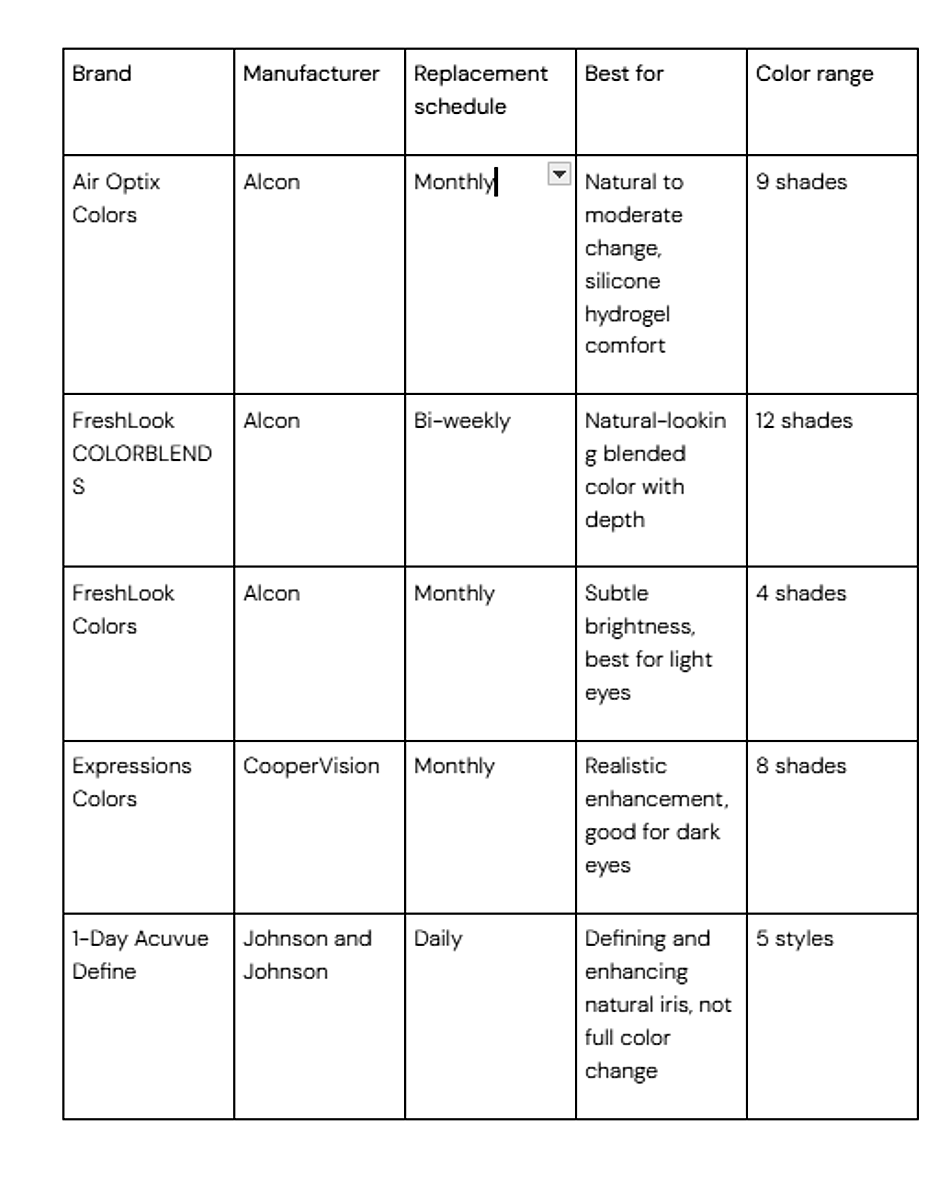
The most widely purchased FDA-approved colored contact brands include Air Optix Colors, FreshLook COLORBLENDS, FreshLook Colors, Expressions Colors, and 1-Day Acuvue Define. Each brand suits a different style goal and replacement schedule. Knowing the difference helps you choose the right product before you search.
Key Differences to Know Before You Buy
Air Optix Colors uses silicone hydrogel material, which allows more oxygen to reach the cornea. This matters for wearers who use lenses for long stretches during the day.
Impressions Color Contact Lens uses a three-color blending pattern that mimics the natural depth of a real iris. This is a strong choice when a natural result is the priority.
1-Day Acuvue Define works differently from the others. It does not change your eye color. It adds a defined limbal ring and subtle tint to make your natural color appear more vivid. It is the closest lens equivalent to a defining eyeliner for your iris.
What to Watch for When Comparing Brands
- Check whether the lens comes in your required prescription power. Not all colored lenses are available in every power range.
- Confirm the replacement schedule matches your wearing habits. Monthly lenses require nightly cleaning and proper storage. Daily lenses are discarded after each use.
- Check the color name against the actual shade. Some lenses labeled “blue” read as quite gray in practice. Product images and color swatch guides help here.
Daily vs. Monthly Colored Contacts: Which Replacement Schedule Fits
Daily disposable colored contacts are the most convenient and hygienic option. Monthly colored contacts offer a lower cost per lens if worn regularly. Bi-weekly lenses sit in between on both dimensions. Your decision depends on how often you plan to wear them, your willingness to follow a cleaning routine, and your budget.
Daily color lenses hold the largest market segment at 54% of the colored lens category, according to Intel Market Research. This reflects a clear consumer preference for convenience and hygiene.
When Daily Disposables Make Sense
- You wear colored contacts occasionally, for events, weekends, or specific outfits
- You want minimal maintenance with no cleaning required
- You prefer a fresh, uncontaminated lens every time you wear them
- You are new to colored contacts and want to try different shades without committing to a full box
When Monthly Lenses Make Sense
- You wear colored contacts almost every day
- You follow a consistent cleaning and storage routine
- You want a lower cost per lens over time
- You have a brand and color you already trust and reorder regularly
Wearing Rules That Apply to All Colored Contacts
Regardless of replacement schedule, these rules apply across all lens types:
- Remove lenses before sleeping unless your eye doctor has specifically approved extended wear
- Never share lenses with anyone, even for a brief try-on
- Replace on schedule. Wearing lenses past their replacement date increases protein buildup, discomfort, and infection risk
- Follow the cleaning instructions specific to your lens brand. Not all solutions work with all materials
The International Contact Lens Leadership Summit, whose guidelines are cited by both the Contact Lens Association of Ophthalmologists and the American Optometric Association, confirms that overnight wear of contact lenses increases complication risk.
How to Buy Colored Contacts Safely Online
Buy only from retailers that require a valid prescription before completing your order. Purchase FDA-cleared brands from licensed sellers only. Avoid beauty supply stores, social media marketplaces, and any site that offers colored contacts without asking for your prescription details. These sources sell illegally and often carry counterfeit products that have not been tested for safety.
The FDA analyzed over 300 illegally sold lenses and found that approximately 60% of counterfeit colored contacts purchased without a prescription tested positive for bacteria, according to the American Academy of Ophthalmology. These lenses have caused corneal infections and, in documented cases, permanent vision loss requiring corneal transplant surgery.
Selling contact lenses in the US without a valid prescription has been illegal since 2005. Federal law classifies all contact lenses as medical devices. Sellers who bypass this requirement face civil penalties, fines, and enforcement action from the FDA.
How to Verify a Retailer Before You Buy
Look for these signs that a retailer is operating legally:
- They ask for your prescription or request that you upload it before checkout
- They sell named, recognizable brands such as Air Optix, FreshLook, or Acuvue
- They list a clear expiration date policy and offer replacement or return options
- Their product pages include prescription entry fields for power, base curve, and diameter
What to Do if You Do Not Have a Current Prescription
Schedule a contact lens exam with your optometrist. Even if your glasses prescription is current, a separate contact lens fitting is required. The contact lens prescription includes measurements that a glasses prescription does not. The exam typically takes under an hour.
At PerfectLensWorld, ordering is straightforward once you have your prescription in hand. You enter your lens details at checkout and choose from a wide range of FDA-approved brands across daily, bi-weekly, and monthly options.
Pick Your Lens, Match Your Look, Order with Confidence
Colored contacts are one of the quickest ways to refresh your appearance. Start with your skin undertone: warm tones suit hazel, honey, or amber; cool tones suit gray or blue. If you have dark eyes, choose an opaque lens with a multi-tonal design and a limbal ring for the most natural result.
If you are trying colored contacts for the first time, a natural-toned FreshLook COLORBLENDS shade or a hazel opaque lens is a better starting point than a vivid color. Both are widely available in prescription and plano, and both have a strong track record for natural-looking results.
Before you order, confirm your prescription is current, check the brand and replacement schedule that fits your lifestyle, and buy from a retailer that asks for your prescription details. That combination produces a good result and keeps your eyes safe.
Browse the full range of colored contacts at PerfectLensWorld to compare brands, shades, and pack sizes by prescription type.
FAQ
Do I need a prescription for colored contacts if I have perfect vision?
Yes. All contact lenses sold in the US, including cosmetic ones with no vision correction, require a valid prescription by federal law. The prescription ensures the lens fits your eye correctly.
Can colored contacts damage your eyes?
Properly prescribed and correctly worn colored contacts from FDA-cleared brands are safe. The risk comes from lenses purchased without a prescription, from unregulated sellers, or from wearing any lens past its recommended replacement schedule. Always buy from a licensed retailer and follow your eye doctor’s guidance.
What colored contacts work on dark brown eyes?
You need opaque tinted lenses for any visible color change on dark eyes. Gray, blue, green, hazel, and honey are all popular choices. Look for lenses with multi-tonal pigment and a limbal ring for the most natural-looking result.
How long can you wear colored contacts in a day?
Follow the wear schedule your eye doctor recommends. Most daily-wear colored contacts are intended for up to 8 to 12 hours of waking wear. Never sleep in lenses unless your eye doctor has specifically approved extended wear for that product.
What is the difference between FreshLook COLORBLENDS and Air Optix Colors?
Both are Alcon products. FreshLook COLORBLENDS uses a three-color blending pattern across 12 shades and produces a natural, layered result. Air Optix Colors uses silicone hydrogel material for better oxygen flow and comes in 9 shades. Air Optix Colors is generally the stronger choice for all-day comfort.
Are plano colored contacts safe?
Yes, if purchased with a valid prescription from a licensed retailer. Plano means the lens has no vision correction power (0.00). The prescription is still required because it includes base curve and diameter measurements that ensure the lens fits your eye correctly.
Which colored contact colors are trending in 2025?
Multi-tonal designs in hazel-green blends and gray-blue tones lead the natural enhancement category for 2025. For bold looks, sapphire blue and emerald green are the top choices. Earthy tones like amber and warm olive have grown in popularity for everyday wear.

